
News & Media
Agroforestry in Naukunda: ecological benefits, economic strategy and climate crisis. Story of an ASIA beneficiary
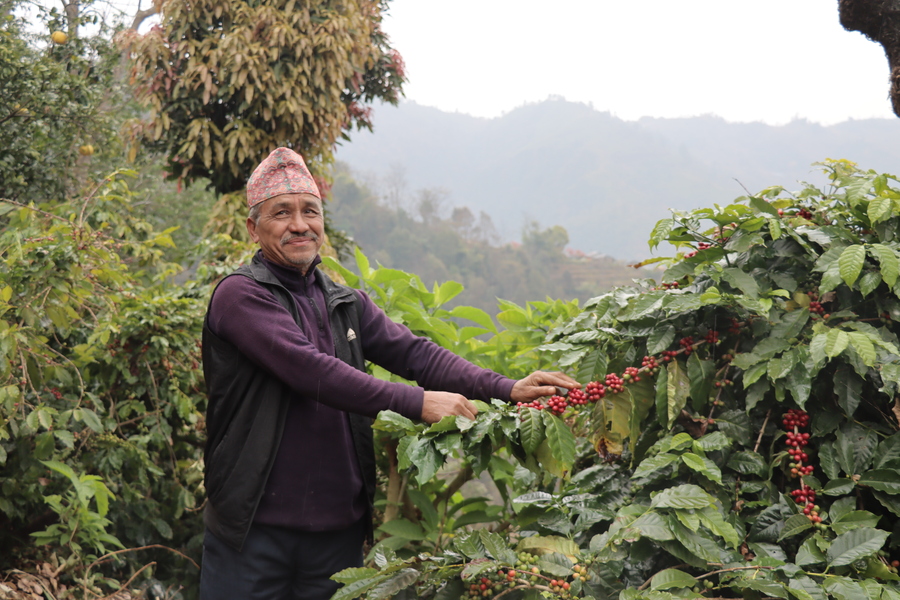
Shyam Bahadur Dangol lives with his family in Sarmathali, a village inside the Rural Municipality of Naukunda, in the Rasuwa district. For 9 years he has been taking part in ASIA’s projects in the field of beekeeping and coffee production in an agroforestry system.
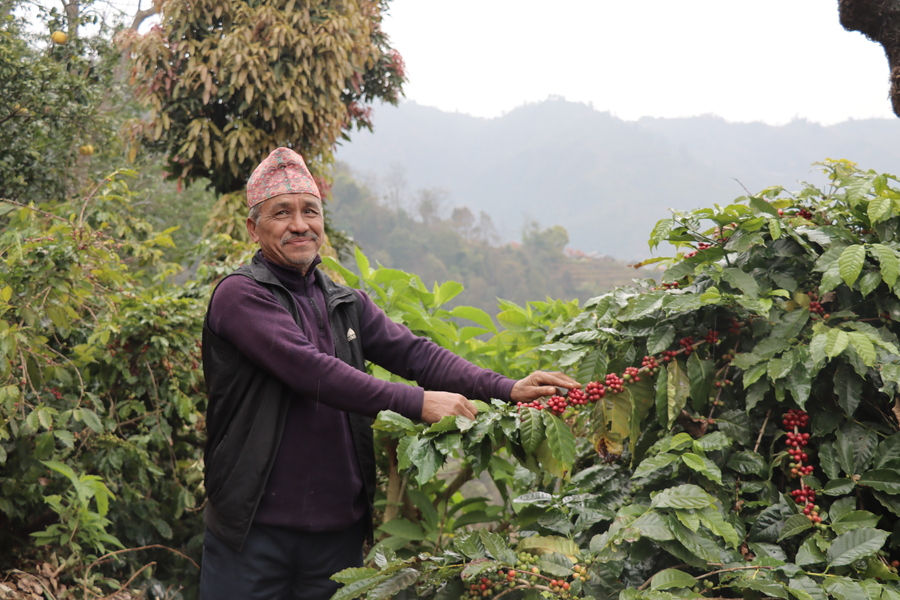
Naukunda, a municipality in the Rasuwa district
The Rasuwa district is located to the north of the Bagmati province, on the border with the Autonomous Region of Tibet. Within it, Naukunda is one of the most isolated and vulnerable areas of the region. Many of its residents belong to the Tamang community, an ethnic group traditionally marginalised, with scarce access to productive and financial resources. 75% of the families in the area are completely dependent on agriculture for their livelihood. However, 50% of the plots are smaller than 0.5 hectares, and many farmers grow monocultures, a practice that impoverishes the soils, reduces biodiversity and limits the possibilities of adaptation to climate change.
ASIA’s intervention: agroforestry with coffee and beekeeping
In this context, in 2017 ASIA began to support beekeeping and coffee growing activities in an agroforestry system, involving more than 200 families in about ten villages of Naukunda. The combination of coffee and honey creates a complementary economic model, as it combines a medium-to-long-term production (coffee) with activities yielding faster profits (beekeeping). This model is emerging as a strategic solution to diversify the sources of income of the families of Naukunda, to encourage a sustainable management of the territory and to strengthen the climate resilience of the rural communities.
Ecological advantages…
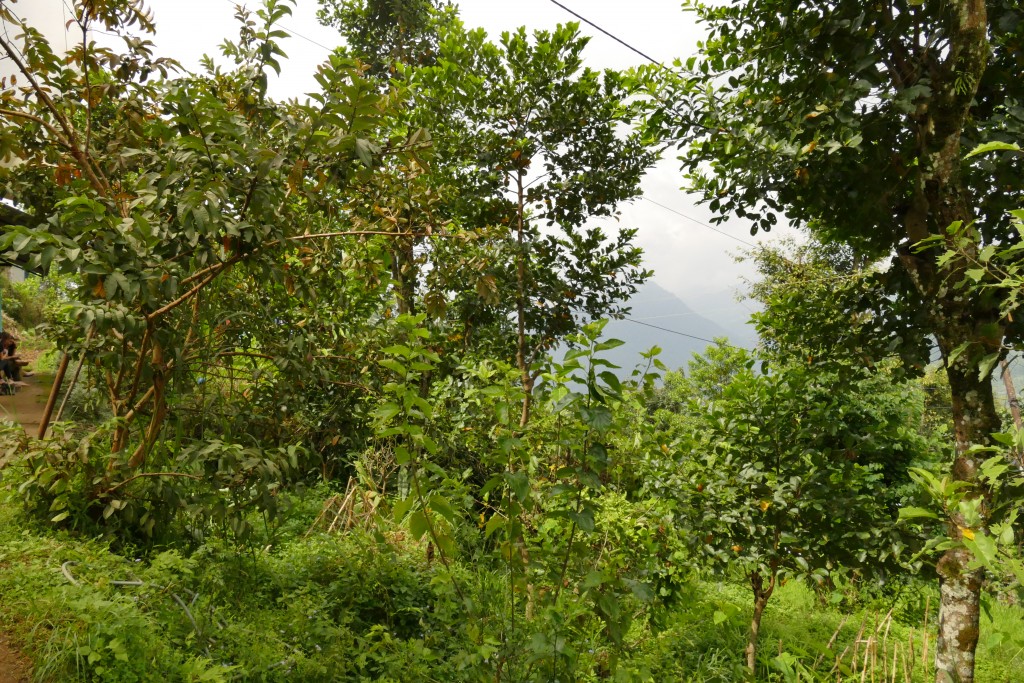
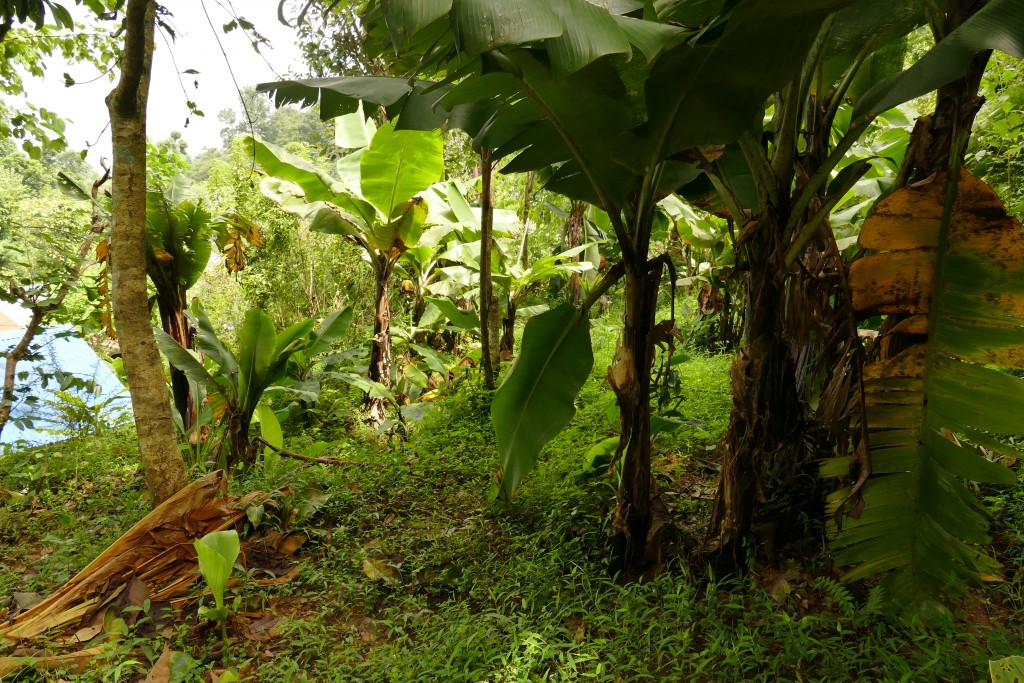
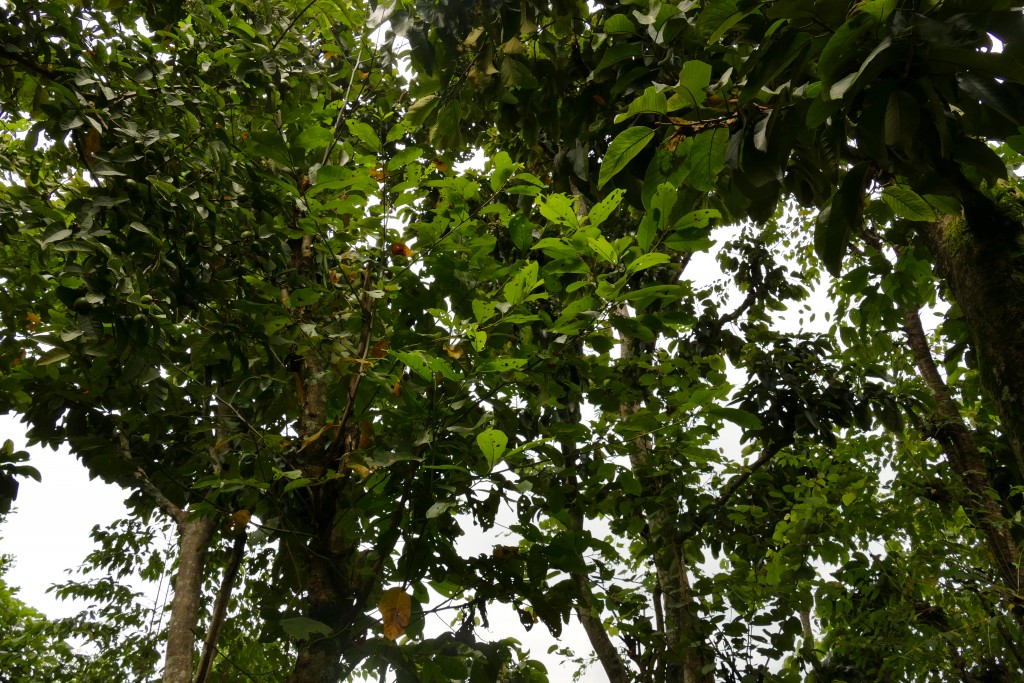
Agroforestry is a growing method based on the combination of tree and shrub species, and sometimes also of livestock grazing, within the same landscape. Agroforestry systems have multiple advantages from the ecological point of view: a better management of soil nutrients, the creation of biodiversity, a low human-impact management of the forest and a reduction of erosion, especially for mountain areas subject to landslides and monsoon rains, as is the case of Naukunda. Growing within these systems exploits the positive interaction between their components, generating benefits for all the beings taking part in them.
… and productive advantages
Besides having a positive impact on the conservation and the management of natural resources, agroforestry brings considerable productive advantages, especially for small producers. The food yield of the herbaceous species grown in an agroforestry system, in fact, turns out to be significantly higher. This is because it is a system that increases the organic substance of the soil by up to 60% in the first 10 years. Moreover, thanks to shading, to natural mulching and to a better infiltration capacity of the ground, the water efficiency increases by 30%, reducing the problem of water consumption.
Why coffee and honey?
Coffee is a plant particularly suited to agroforestry, growing well in the humid environment that forms under the cover of other trees. Shaded systems, in fact, help to regulate the temperature and to protect coffee plants from climate stresses. On the other hand, the presence of diversified vegetation favours the development of a biodiverse habitat, suitable for pollinating insects, birds, microorganisms and other species. In this context, bees can benefit from an abundant and varied local flora, providing, in return, the pollination service to the agroforestry vegetation.
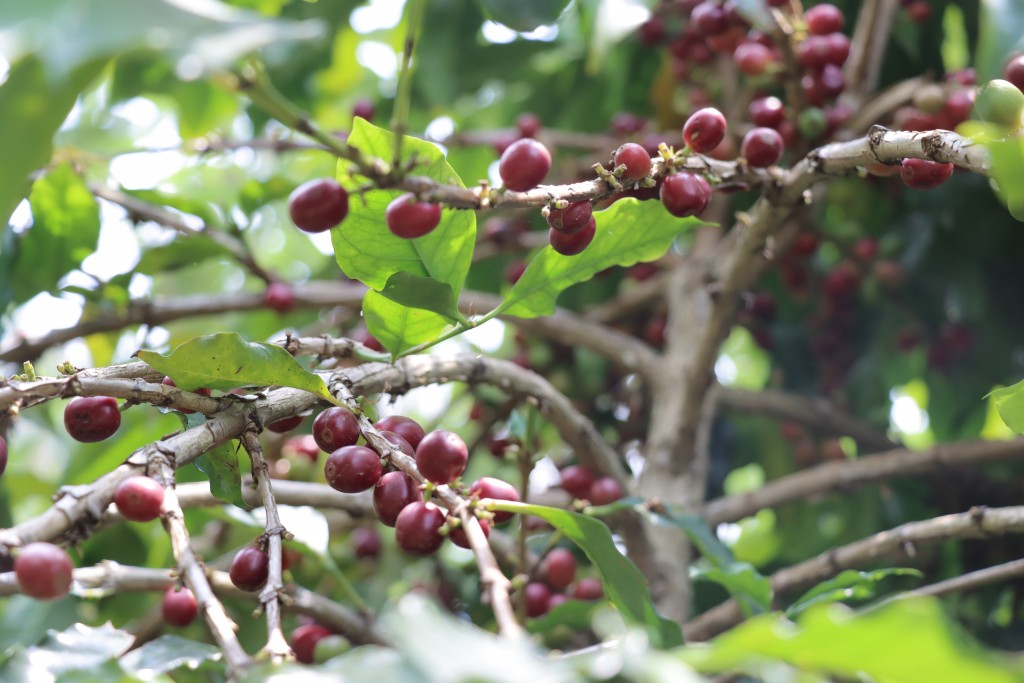
Shyam Bahadur Dangol has 1500 plants, 5 beehives, and plans to expand his production
Shyam is one of the beneficiaries who, together with his family, is developing an agroforestry system integrating coffee growing and beekeeping. After so many years of commitment, today he looks with satisfaction at the path travelled, especially as regards coffee. Starting from a few plants, in fact, he has managed over time to expand his cultivation until reaching 1500 plants. One of the most significant results among the producers of Naukunda.
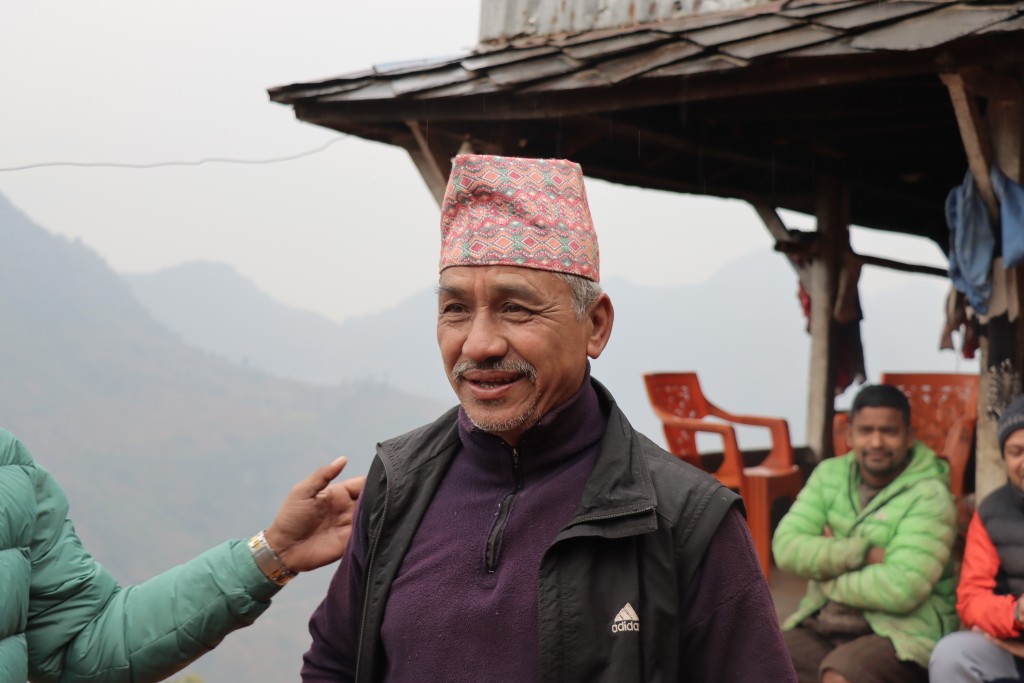
Shyam tells us he is happy to live in Saramthali, the place where he was born and where he raised his children. Where he can always have fresh food available, harvested close to the village, and where life is quiet.
Looking to the future, he wants to be confident: he plans to expand both his activities. Moreover, he is planning to diversify his agroforestry system further: in the coming months, he intends to plant 1000 kg of ginger bulbs, growing it in intercropping together with coffee.
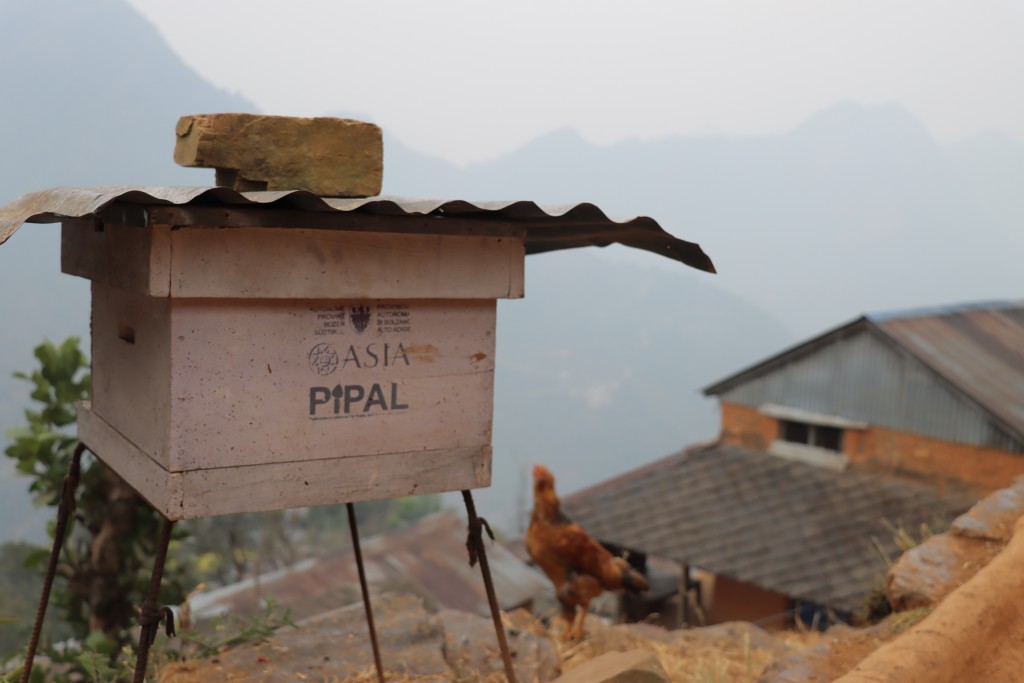
As for beekeeping, he would very much like to be able to keep more bee colonies. At the moment he owns 5 beehives. Honey is an interesting product, he explains to us, because it is harvested frequently, and a 700 ml jar sells for up to 1000-1200 Nepalese rupees. Lately, however, this part of his activities is not generating any profit.
No nectar, no honey. The effects of the climate crisis in the Himalayan belt
Last autumn, none of the beekeepers of Saramthali, men or women, was able to harvest honey from their own beehives. The bees, in fact, were not able to produce sufficient quantities of it.
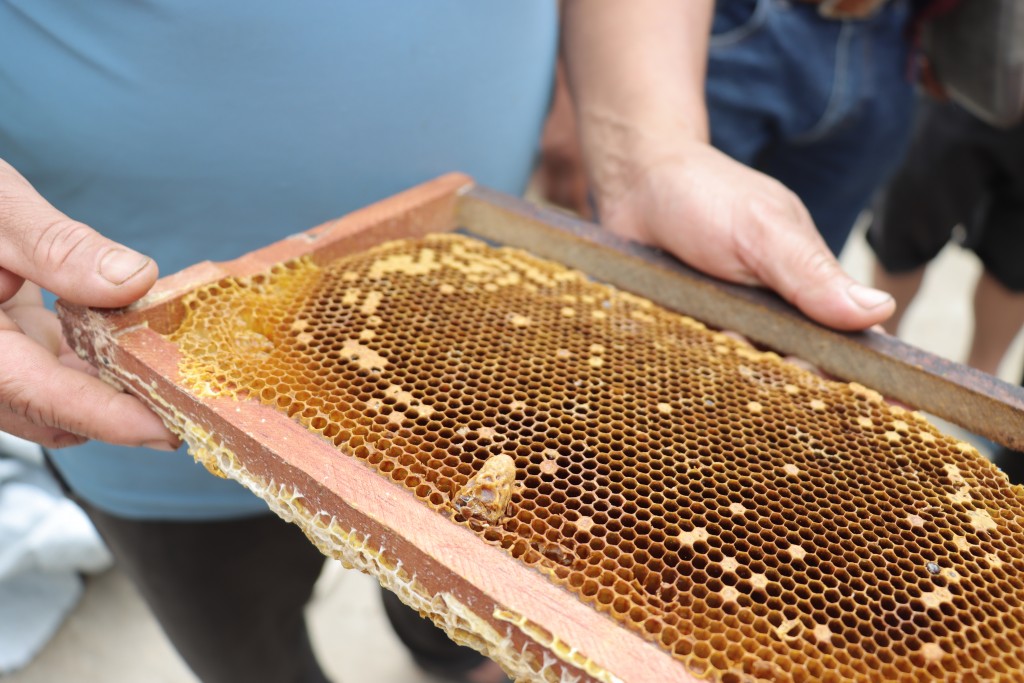
The causes of this shortage are multiple and intertwined with one another, but fundamentally linked to the alteration of the normal seasonal rhythms. As Shyam explained to us, this year the monsoon rains went on well beyond the summer months, following a trend that in recent years is occurring in an increasingly marked way.
This meant that strong and intense precipitations, typical of the summer, continued during the autumn, a period normally characterised by a drier climate and by the flowering of many nectar-producing plants. The continuous rains washed away much of the nectar from the flowers the bees usually draw on. Moreover, when it rains the pollinators have great difficulty in moving and looking for food, because water prevents them from flying easily.
As a result, the cold season began right after the end of the rains. When the monsoon finally ended, it was too late for the bees to gather the necessary nourishment, because of the too low temperatures. The colonies started the winter without sufficient food reserves and, not having been able to accumulate enough nectar, they could not produce honey.
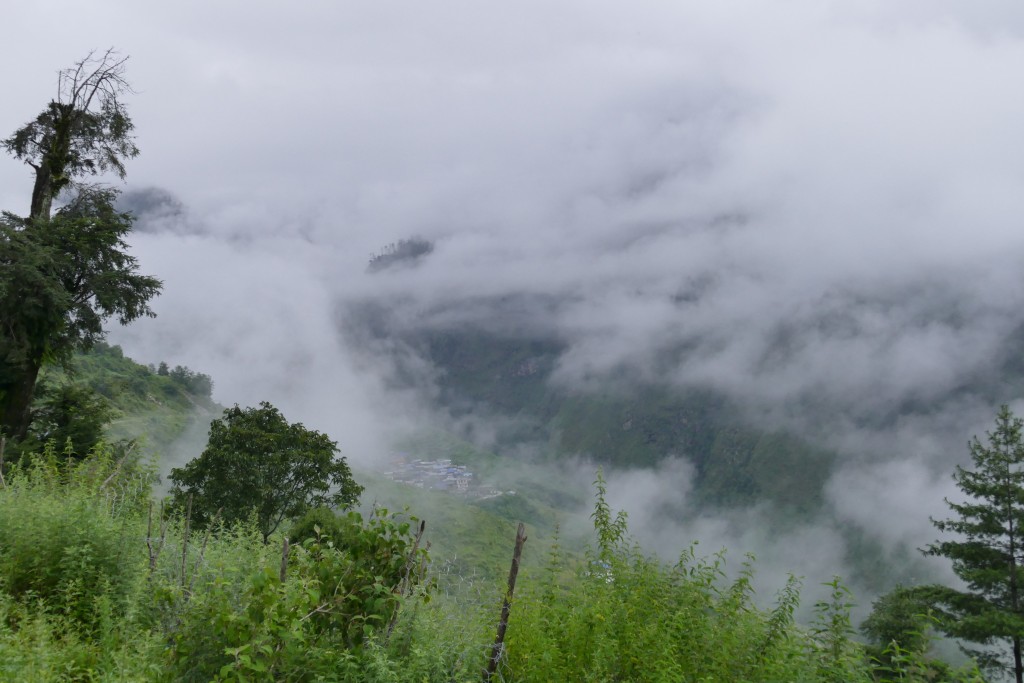
Problems and more problems: frost, fires, hail, water scarcity
As if that were not enough, the frequent forest fires in the area regularly destroy many of the nectar-producing plants within reach of the beneficiaries’ bees. Some beekeepers, among other things, reported that the harsh winter temperatures caused the death of a large part of the colonies. For this reason, Shyam tells us, they are trying to find a solution to somehow cover the beehives in winter, so as to keep them warm.
Moreover, the area of Saramthali has a problem of water resources that are drying up, especially after the 2015 earthquake. Some water springs completely stopped flowing with the earthquake. Then the water came back, little by little, but it is still less than there was before. Shyam believes that climate change is contributing to further aggravating the water scarcity in the area.
Winter, too, is no longer what it used to be, when the snowfalls covered the cultivated fields for months, protecting the crops from animals and other risks. Today, it no longer snows in Naukunda. However, every now and then sudden and extremely violent storms occur. It is not rare that hail irreparably damages vegetables, avocado plants and coffee plants.
Shyam reveals to us that if the situation keeps worsening year after year, as seems likely, he and his wife will be forced to leave the village. After all, Saramthali is emptying out, and his children have already left.
“There were 7 of us in the house. Now we are 2”.
Conclusions
The model designed by ASIA for Naukunda has proved, at least so far, very effective. Cases like that of Shyam Bahadur Dangol show it, who despite everything is very happy with his coffee productions. Unfortunately, however, the effects of the climate change we are experiencing at global level are multiple, unexpected and overlapping. A crisis that is becoming more and more alarming for its proportions, and to which farmers cannot respond with definitive solutions, with the means they have at their disposal.
Those who pay the price are always the small producers, above all those who live in areas where the ecological and economic balance is in itself a delicate matter.
Agroforestry brings a great many advantages, but it is not enough if the rhythms of the seasons are overturned. The agroforestry system is based on a sustainable management of the resources, respectful of the local habitat. But if those resources are destroyed, no management method can guarantee the survival of an ecological landscape.
What we are left to do, in places like Naukunda, is to keep building and cultivating forms of resilience to climate change. And to support those who are on the side of the earth, devoting their life to taking care of it.
Pubblicato il
11/06/2026