
News & Media
“Restoring Dignity and Prospects”: An Interview with Mauricio Bisol, ASIA Country Representative in Myanmar
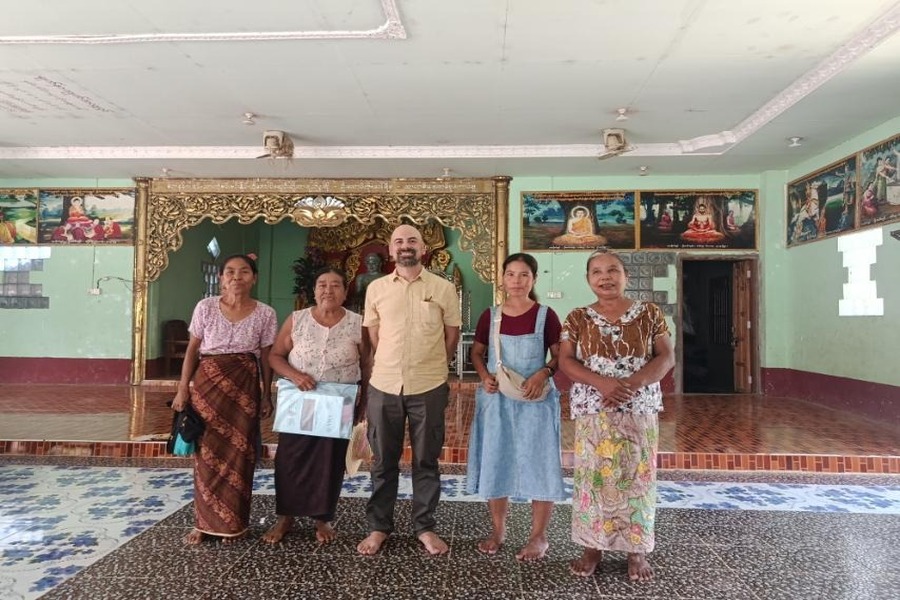
1. Hello Mauricio, you are currently based in Yangon as ASIA’s Country Representative in Myanmar. Your previous professional experience was in Africa: what has it been like adjusting to Southeast Asia and to ASIA’s fieldwork during these first few months?
The experience has been extremely positive. First of all, on a personal level: despite the country being very complex in many respects, I have been able to lead a fairly normal life in Yangon.Professionally, it has been a real pleasure to find a competent, dedicated and experienced local team, which makes day-to-day work much smoother.
The collaboration with colleagues at the Rome headquarters has also been extraordinary. Having worked with several NGOs, I can say with certainty that this team is truly special, driven by a great and genuine sense of humanity.
2. ASIA’s commitment in Myanmar has intensified in response to the emergencies affecting the country, ranging from environmental crises to socio-economic challenges. From an operational perspective, what are the main priorities and challenges facing the projects ASIA is currently implementing on the ground?
We are currently working intensively in the Mandalay Region, one of the areas hardest hit by the March 2025 earthquake. Our priorities focus on two main areas: agricultural recovery and reconstruction.
Supporting farmers means protecting the backbone of the country, which is now severely threatened by climate change and internal tensions. To this end, we support them by providing material resources, irrigation systems and training in sustainable farming techniques. At the same time, we are on the front lines of efforts to rebuild schools and healthcare facilities, fully aware that there is still a tremendous amount of work to be done on the ground.
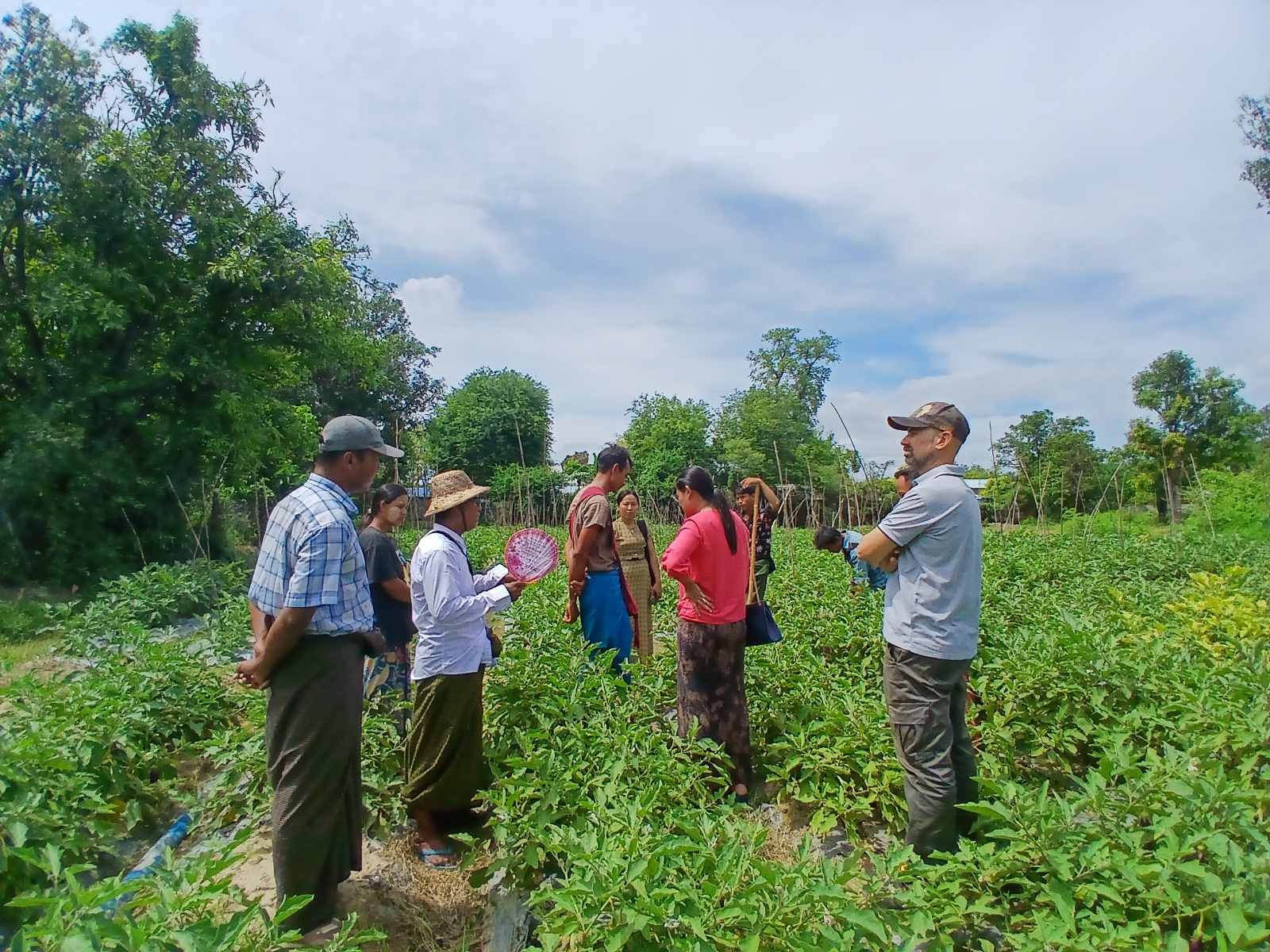
3. Agriculture has always been at the heart of our work. In a complex context such as Myanmar, what role does smart agriculture play in ASIA’s projects? Are there any accessible techniques or technologies that we are introducing to provide practical support to small-scale farmers?
Yes. We are currently working with approximately 1,600 farmers, and all our projects include a capacity-building component. We have three Myanmar agronomists on our team who work directly with the beneficiaries. In addition, we have hired specialised local consultants to provide both theoretical and practical training.
Our workshops offer hands-on training in sustainable family farming, covering the entire agricultural cycle, from ecological cultivation and natural pest management to post-harvest handling and nutrition security. The response from beneficiaries has been very positive, with active participation and the implementation of these techniques directly in the field.
We also set up demonstration plots in villages to show beneficiaries first-hand the impact of sustainable farming practices in the field.
4. A large part of the population is made up of young people facing considerable uncertainty about their future. How do ASIA’s initiatives and projects manage to engage younger generations, offering them opportunities for training and local development?
Our projects invest directly in the future of rural communities by strengthening local agriculture and livelihoods, as well as improving access to essential services such as healthcare and education, including through the provision of school supplies. In this way, we create new opportunities for local development, giving young people concrete reasons to stay, reducing rural-to-urban migration and helping them overcome uncertainty about their future.
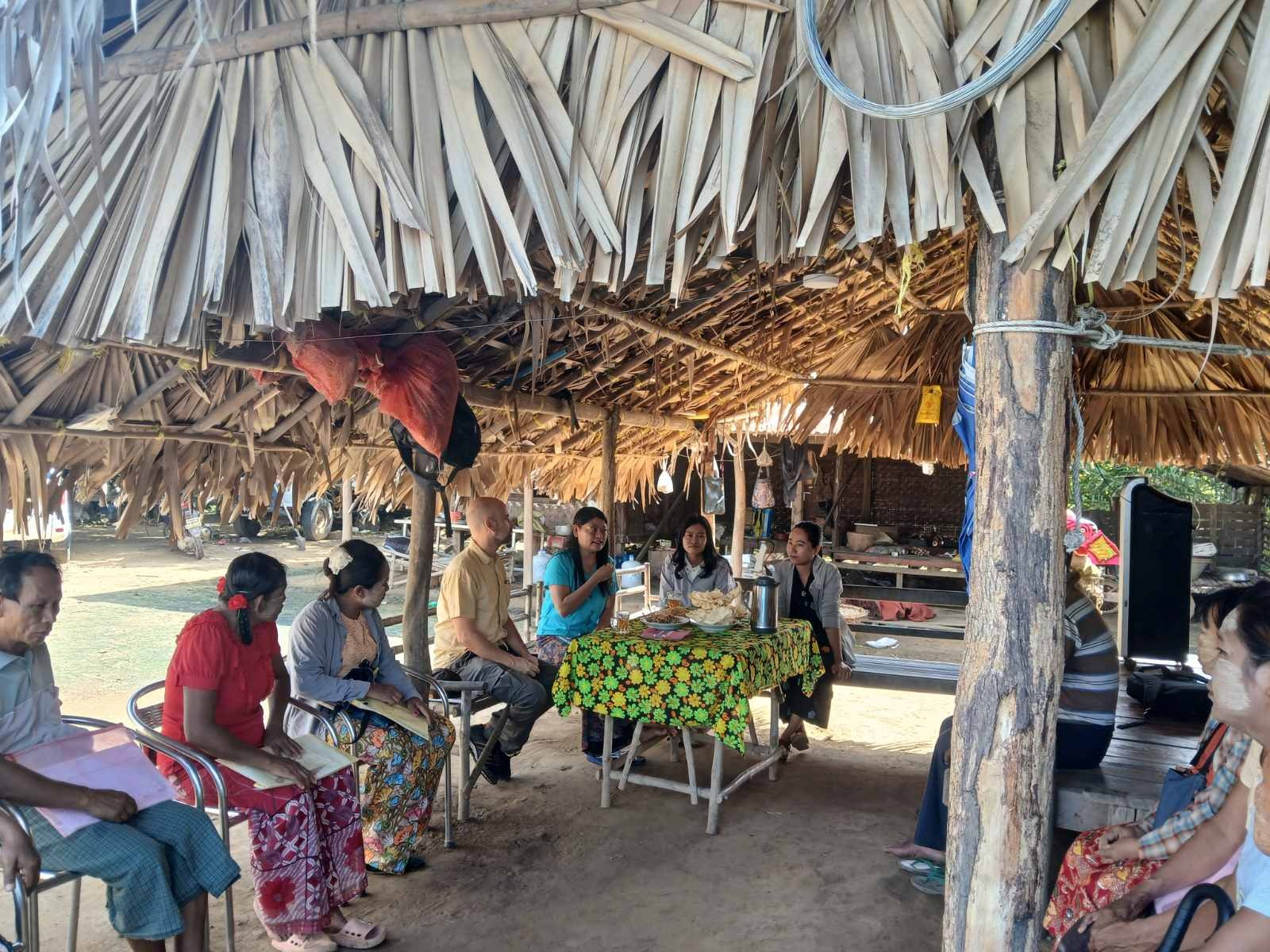
5. Working in the humanitarian and development sector requires great flexibility. What are the next steps and main objectives that ASIA aims to achieve in Myanmar in the short and medium term?
In a complex context such as Myanmar, the next steps must begin with listening to communities and adapting our interventions to their needs and access conditions. In the short term, our priority is to ensure continued support for the most vulnerable families, linking the response to their immediate needs with the recovery of their livelihoods. In the medium term, we aim to build on ASIA’s experience in food security and rural development: from home gardening and sustainable agricultural practices to strengthening productive activities and income-generating opportunities. Our goal is to help communities regain their autonomy and strengthen their capacity to cope with future challenges, working alongside local partners. New projects will be shaped by the needs identified, the resources available and operational possibilities. Rather than announcing geographical expansion at this stage, we want to consolidate the quality and continuity of our commitment, while maintaining the flexibility needed to reach those in the most vulnerable situations.
6. To conclude, what has this initial experience in Myanmar meant to you, and what would you like to say to our readers to help them understand the importance of ASIA’s work on the ground?
What I take away from this initial period in Myanmar is a profound admiration for the resilience of the local population and the extraordinary dedication of our team. Despite the daily challenges and the uncertainties of the situation, I have encountered a community that refuses to give up and continues to look to the future with hope. To our readers, I would like to say that ASIA’s work on the ground is about much more than distributing material aid or supporting agriculture: it is about restoring dignity, stability and prospects for the future to people facing enormous challenges.
Pubblicato il
11/11/2026