
What we do
Development of the honey value chain in the buffer zones of Langtang National Park as a means of reducing environmental conflicts and ensuring the livelihoods of rural populations.
Countries
Fields of intervention
- Opening date: March 2024
- Closing date: February 2025
WHERE
Nepal, Bagmati Province, Rasuwa District, Naukunda Municipality, 5 wards within the municipality.
CONTEXT
In 2025, ASIA continued its long-term commitment to strengthening rural livelihoods and environmental protection in the buffer zones of Langtang National Park, Rasuwa District, through a project focused on the development of the local honey value chain. The intervention was designed in a context marked by geographic isolation, limited access to natural resources, recurring climate and disaster-related vulnerabilities, and persistent socio-economic fragility affecting rural households, especially women-led Tamang families. Building on ASIA’s presence in the area since 2015 and on previous beekeeping support activities, the project aimed to transform honey production from a small-scale supplementary practice into a more sustainable and profitable livelihood opportunity. Baseline findings showed strong community interest and encouraging initial results, with most beneficiaries able to maintain bee colonies and produce and sell honey locally. At the same time, the assessment highlighted the need for additional technical support, improved harvesting and storage practices, stronger business planning capacities, and better market connections. The project therefore combined technical training, provision of additional hives and equipment, and value-chain development support to improve production quality and quantity, increase household income, and reduce pressure on protected natural resources, contributing to both community resilience and biodiversity conservation.
OBJECTIVES
General objective
Improve the socioeconomic status of communities living in the buffer zones of Langtang National Park and promote sustainable income generation practices, while reducing conflict between the park and buffer zone populations.
Specific objective
Beekeepers possess the technical knowledge, tools, and skills that enable them to achieve effective, sustainable, and high-quality honey production, increasing family income and sales in the Rasuwa and Kathmandu areas.
PROJECT ACTIVITIES
- Training on hive management and technical follow-up
- Training on harvesting and post-harvest management, as well as on honey processing and preservation techniques
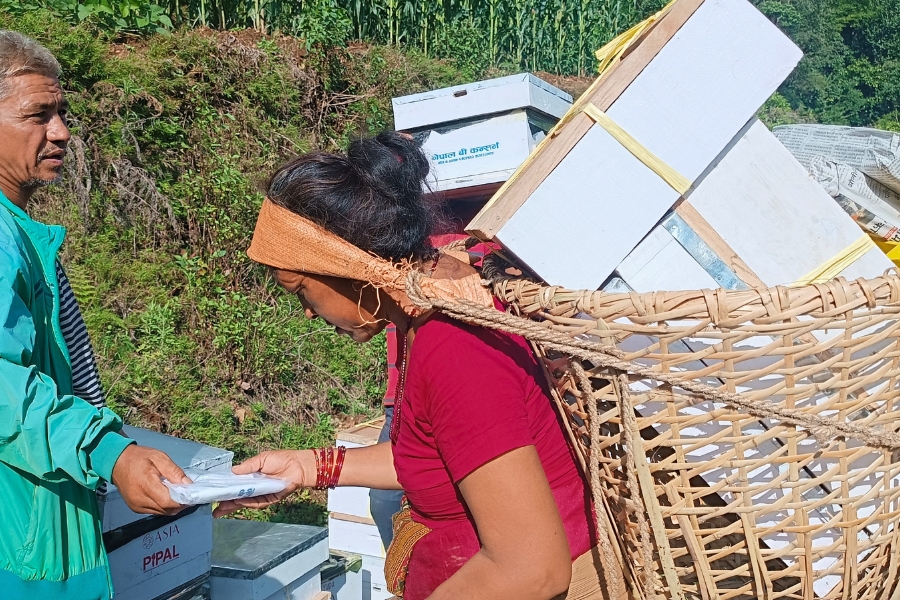
- Distribution of technical equipment
- Distribution of beehives
- Training on business planning (preparation and establishment of market linkages within the Rasuwa district and the Kathmandu area)
RESULTS
- Improve beekeepers’ technical skills in hive management; reduce swarming and manage hives more effectively.
- Increase the quality of honey produced through better management of harvesting and post-harvest stages, as well as processing and storage.
- Increase the quantity of honey produced by expanding the number of available hives.
- Strengthen beekeepers’ skills in financial management and business planning, and establish market linkages in the Rasuwa and Kathmandu districts.
BENEFICIARIES
Direct: 50 beekeepers and their families (75% women from the Tamang ethnic minority; beneficiaries are between 25 and 50 years old).
Indirect: 1,250 people living in the buffer zones of Langtang National Park, including family members of beneficiaries.
PARTNERS
PIPAL Nepal
Rural Municipality of Naukunda
Agricultural Department of Naukunda Municipality
Agriculture Knowledge Center (AKC)