News & Media
Happy Losar - Year 2151 - Wood Dragon
With the Tibetan New Year approaching, we are happy to share with you an in-depth look at Losar. Tashi Deleg –
བོད་རྒྱལ་ལོ་ ༢༡༥༡ རབ་གནས་ཤིང་འབྲུག་ལོའི་གནམ་ལོ་གསར་ཚེས་ལ་འཚམས་འདྲིའི་བཀྲིས་བདེ་ལེགས་ཞུ།
Losar, in the Tibetan language, translates as New Year. Lo means year and sar means new. It is one of the main festivals of the Tibetan people, as it marks the beginning of a new year of the Tibetan lunar calendar. This year, the first day of Losar falls on 10 February, which represents the beginning of the year 2151 according to the Tibetan calendar.
Although the official celebrations begin on the first day of the new year, the preparations start much earlier. Tibetans spend the days preceding the new year engaged in rituals to free themselves from the negativity and the misfortune of the previous year. This period, which begins two days before Losar, is known as Gutor. This year Gutor falls on 8 February.
The first Gutor or Nyi Shu Gu falls on the 29th day of the last month of the year. On this day people clean their houses and bathe to purify the environment and the body from negativity, diseases and obstacles. In the evening, families drink a soup known as Guthuk, made with meat, wheat, peas and a variety of beans. The soup contains dough balls, inside which ingredients such as chillies, salt, wool and coal are placed. Each member of the family is served a dough ball inside the soup and the ingredient the person finds in their dough ball is supposed to allude to their character. For example, if a person finds coal in their dough ball, they are believed to have a “black heart”. It is a fun tradition that usually ends with much laughter.
The second part of the night involves the lighting of an effigy of lyu, which symbolises the evil spirits, and the disposal of the drilue to drive diseases away from one’s body. The lyu is usually made in the shape of a little man with flour and water, while the drilue is a piece of dough that is handed to each member of the family, who squashes it to leave the imprint of their hand. At the end of the evening, the dough balls and the leftover soup are put into a plate containing the lyu and the drilue. These will be disposed of in a place far from the house.
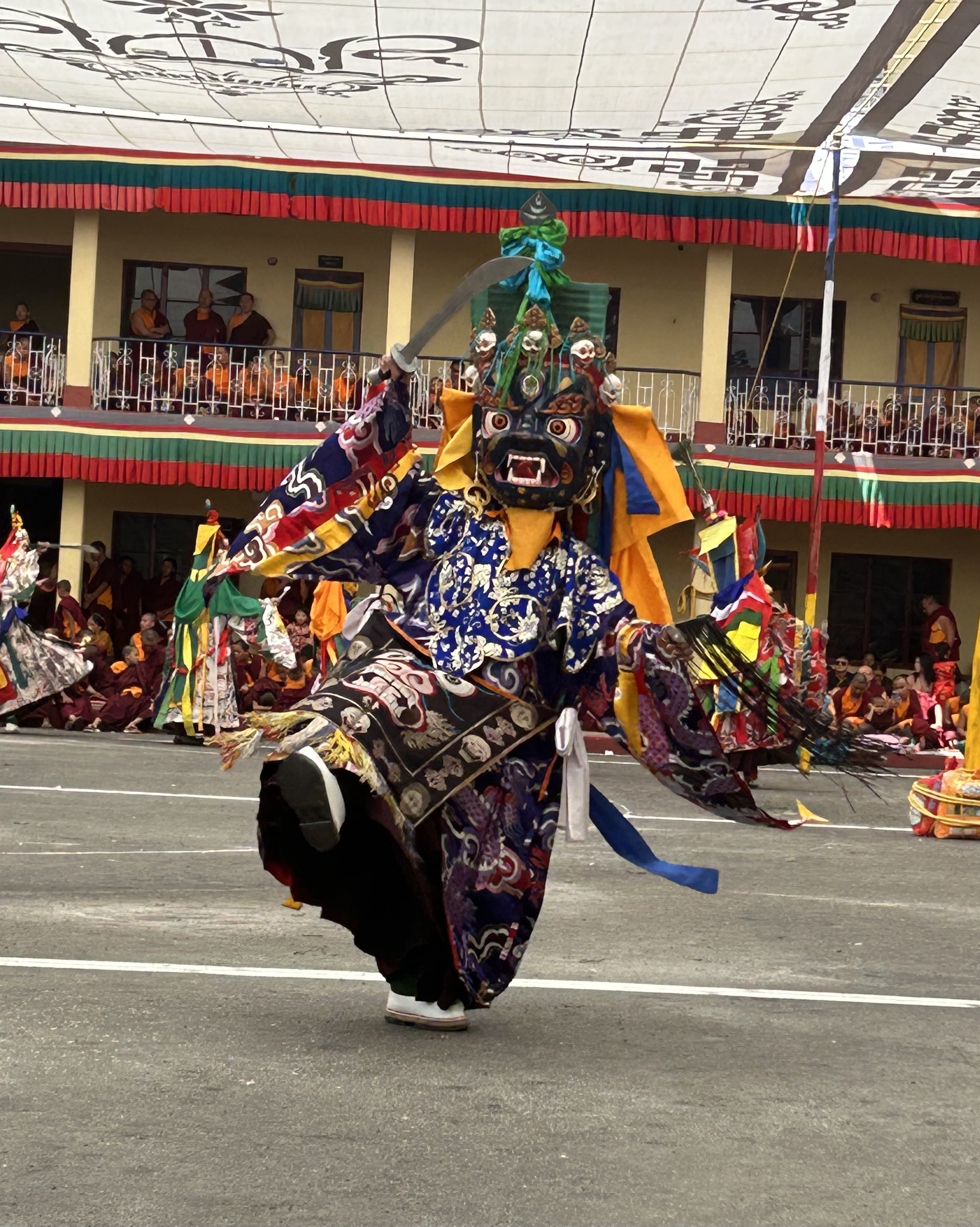
In the days preceding Losar, the Tibetan monasteries and temples also undertake specific rites to expel the negative habits of the old year. The monks perform week-long rituals, some of which culminate in the famous spiritual dances known as cham.
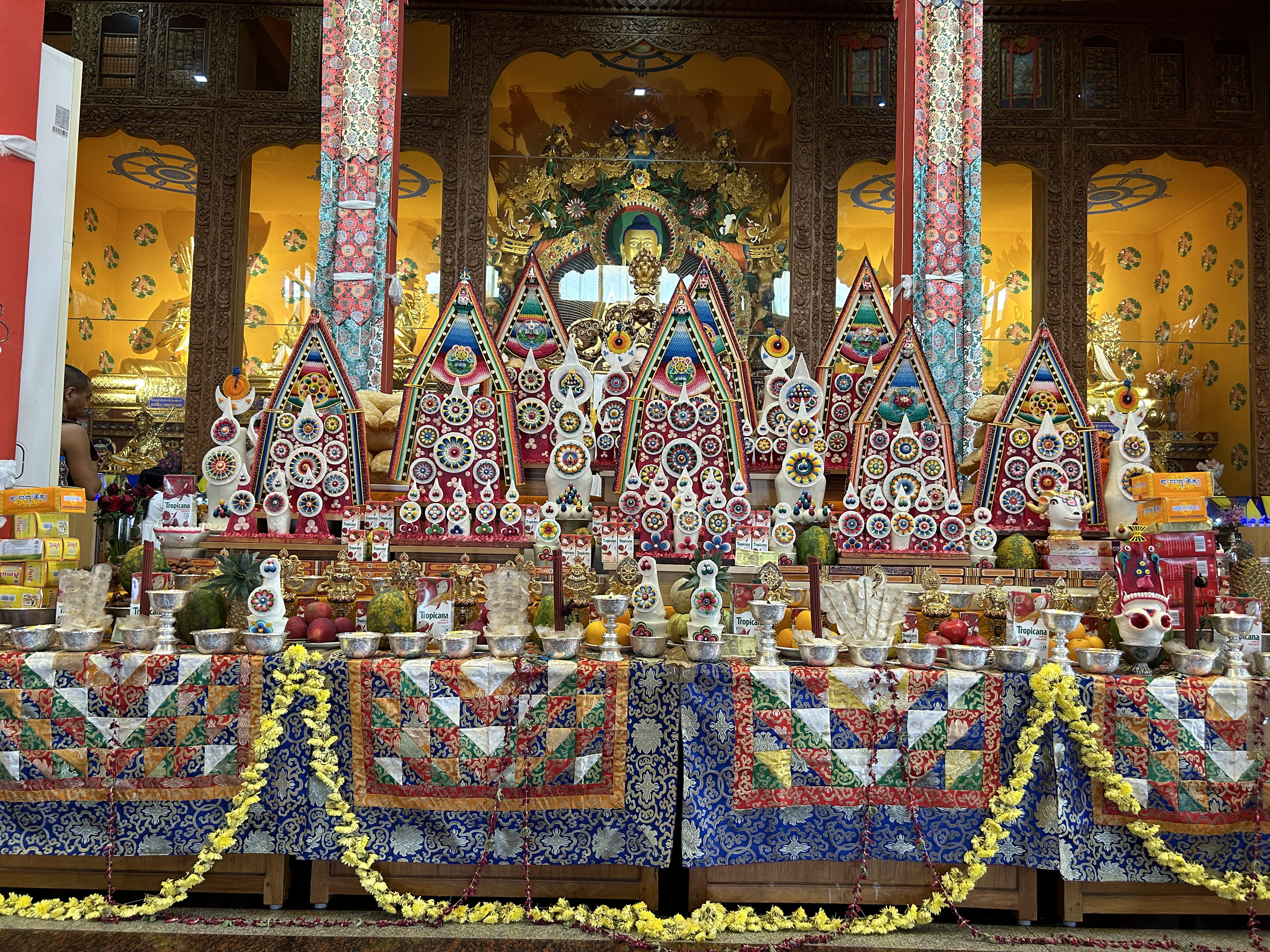
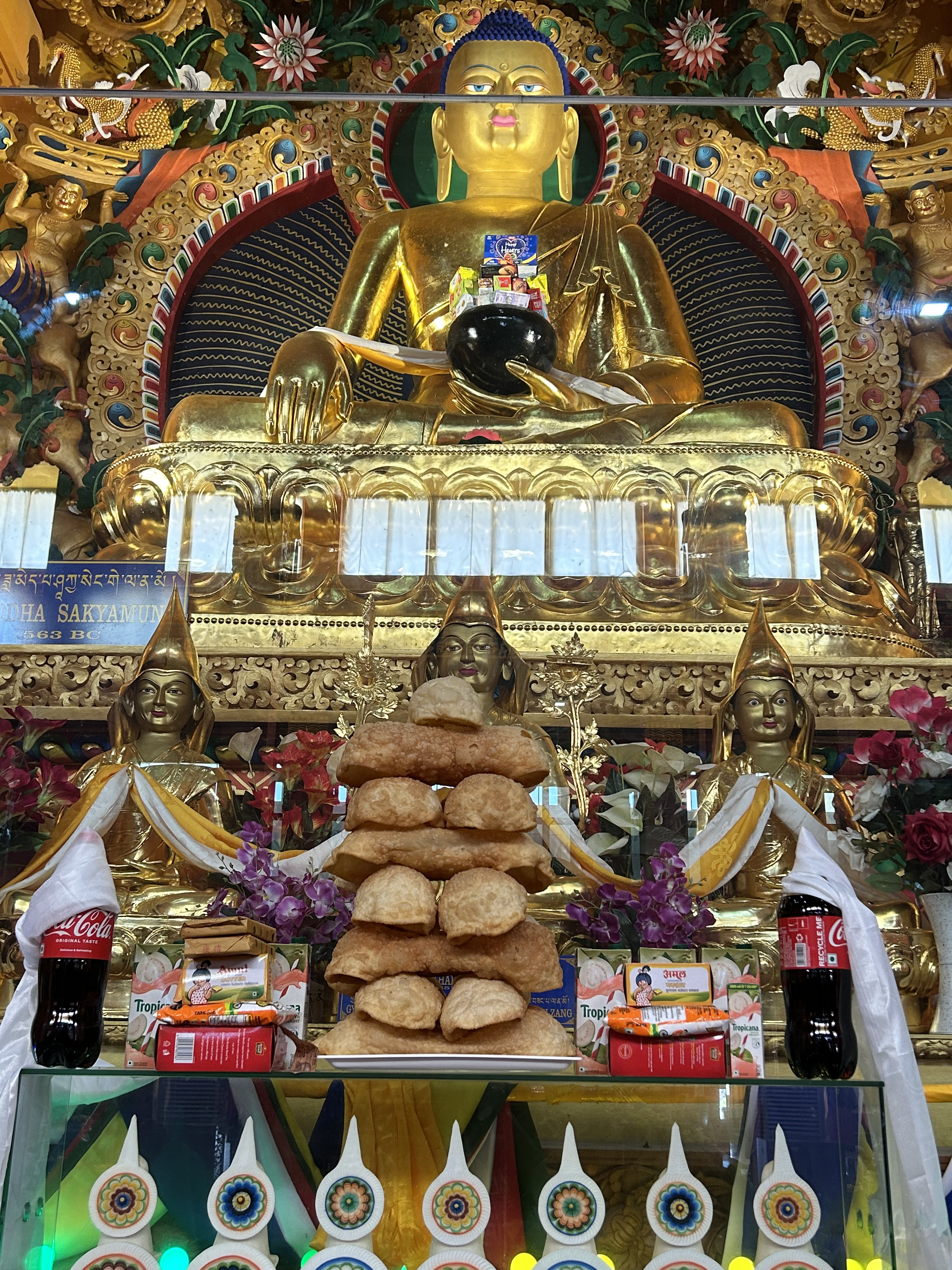
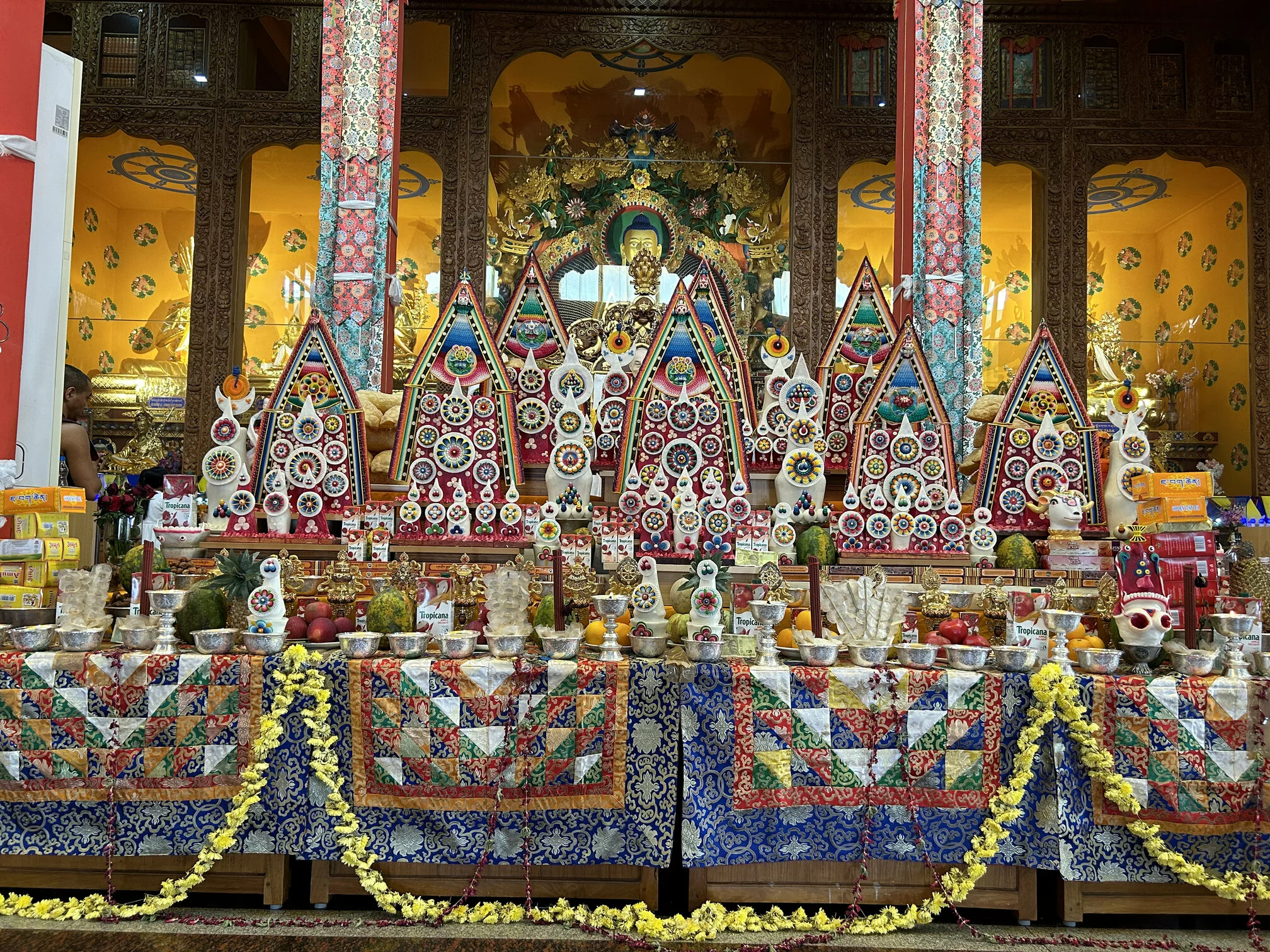
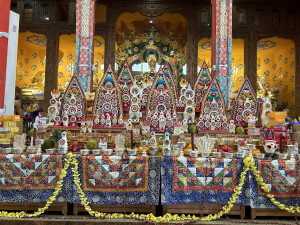
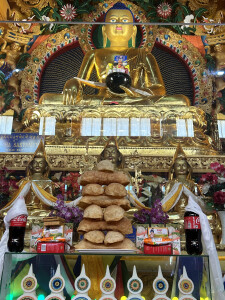 On the eve of Losar, families spend their time decorating the house, setting up the altar and preparing a banquet for the following day. Although there are no precise rules on how to set up an altar, the essential elements are the luggo (sheep’s head), the chemar (made of roasted barley flour, sugar and butter), and offerings of food and drinks.
The festival officially begins on the first day of the new year. Tibetans consider it an auspicious occasion and it is believed that on this day one must wake up well before dawn. Everyone is invited to dress in new clothes and to start the day praying at the altar and making offerings of chemar. Tibetan families traditionally drink a Tibetan butter drink and eat khapse (Tibetan fried sweets) and dresil (sweet rice dish) as breakfast on this day. The rest of the day is spent relaxing at home with the members of the family and exchanging greetings with neighbours and relatives.
On the second day, people visit friends and relatives and spend the day in the company of food, drinks and games. Children receive gifts from the elders. This is perhaps the most enjoyable day for those who love socialising and eating good food. In the homes of the host families, Chang (Tibetan rice wine) is also served.
The third day is devoted to visiting monasteries and spiritual masters. Tibetans living in large settlements gather on this day to offer the lhasang – an offering of incense, which is essentially an offering of the smoke of medicinal and fragrant herbs. During this day, many Tibetans also replace the old prayer flags on the roof of their houses with new ones.
While in Tibet the Losar celebrations extend for up to 15 days, in the diaspora community the festivities last three days. From the fourth day onwards, Tibetan families go on pilgrimage to the places of worship.
Pubblicato il
08/02/2024