News & Media
The voiceless half, an online conference to give voice to Nepalese women
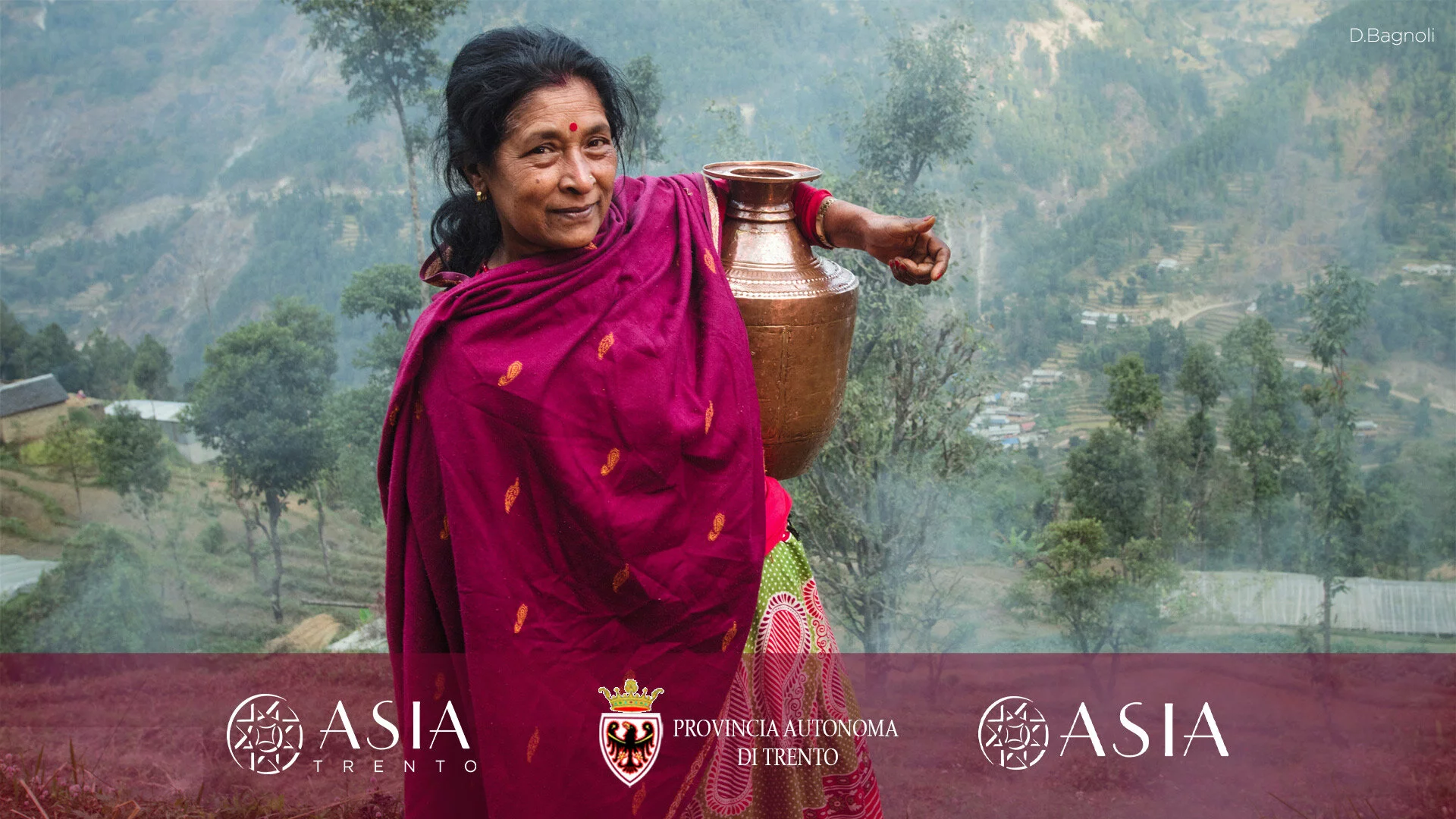
ASIA Trento is organising a web conference to tell about the condition of women in Nepal. The event, which will be held on 23 September at 10 am, is part of the wide programme of environmental conservation and improvement of the female condition in the Rasuwa district in Nepal, financed by the Autonomous Province of Trento and the ASIA Trento, Roma and Nepal network.
Daughter, wife, mother. In Nepal the woman is never considered as such, although gender equality is regulated by the Nepalese constitution of 2015 and in the same year the first woman president in the history of Nepal was elected. Nepalese society has always been traditionally patriarchal: men have always been considered superior to women.
The woman-daughter, still today, continues not to have the same opportunities as her male brothers: the female schooling rate is 57.4% compared to the 75.1% male rate. In rural areas, in particular, very often girls are forced to marry before puberty. In the ancient texts of the Hindu religion it was clearly specified that if a girl marries after reaching puberty, her parents have failed their task and could go to hell. Today early marriages are illegal but traditionally parents try to marry their daughters early and not let them study, since the bride's parents are obliged to offer a dowry for the future life of the couple, which is commensurate with the level of education and caste.
The woman-wife takes care of domestic management, of work in the fields and of the care of the children. Traditionally the woman does not have the same rights as the man: her position in society is mainly subordinate to that of her husband, both in social and economic positions; women have always had limited access to the market economy, to productive services as well as to the education system, to health care and to local politics. Women do not have the right to own land or to have an independent income.
During the menstrual period, particularly in the remote and less developed areas of Nepal, women are often isolated in separate rooms or huts, as they are considered impure. Chhaupadi (a social practice of Hindu tradition that forbids women from doing any kind of activity during menstruation and provides for confinement in huts created specifically for this purpose) has been banned in Nepal since 2005 and has become a criminal offence since 2018. However, some beliefs still persist and the woman continues to be discriminated against in this period; very often she is prevented from touching food and from coming into contact with water.
The woman-mother is very often a child, who gives birth to children when she herself should still be considered a child. A wife who cannot have children is often abandoned and discriminated against. Nepalese mothers are frequently malnourished since, ever since they were children, they were fed after their male relatives. During pregnancy they do not have regular check-ups and often develop problems related to childbirth. In rural areas most women have never met a gynaecologist and tend to want to give birth at home out of fear and ignorance.
Very often the woman is regarded as a slave of her husband and cannot go against the man. Domestic violence is very frequent in Nepal: 48% of women declared they had suffered violence and 27% had suffered physical violence. The condition of home isolation imposed by the current lockdown, in order to limit the spread of Covid-19 (a first lockdown in Nepal lasted from 24 March to 17 June and the current one started on 20 August and is currently ongoing), has caused numerous cases of domestic violence; the National Women Commission declares that “every 10 minutes a woman calls the anti-violence telephone helpline to ask for assistance”. Many women do not report the violence they suffered for fear of being dishonoured by their families.
WHAT WE DO
The ASIA network (made up of ASIA Trento, ASIA Roma and ASIA Nepal), in collaboration with the Nepal Agroforestry Foundation, the Langtang Park and the Trento partners Associazione Forestali Trentini, Associazione Apicoltori Trentini and Trentino for Tibet, is implementing a project aimed at improving the living conditions of the women who live in the areas surrounding the Langtang Park, through income opportunities linked to environmental conservation and the promotion of non-timber forest supply chains (creation and management of nurseries for tree planting for reforestation, breeding, beekeeping, mushroom growing).
The project, financed by the Autonomous Province of Trento and the ASIA network, includes the carrying out of several training and distribution activities addressed to women and their families in order to strengthen their skills in the agricultural and economic fields, as well as to make the women of the rural area of Rasuwa aware of their rights to land and property.
The initiative, which lasts three years, also includes numerous awareness-raising activities for the Trento and Italian community on topics such as the condition of women in Nepal, environmental conservation and climate change, and beekeeping. Finally, a final photographic exhibition closely linked to the activities of the project will be organised.
AN ONLINE CONFERENCE TO GIVE VOICE TO NEPALESE WOMEN
The first awareness-raising appointment includes the online conference “The voiceless half. Gender discrimination and women's rights in Nepal”. The conference can be followed on the web on the GoToMeeting platform on 23 September from 10.00 to 12.00 by registering for free here>>
A FUNDRAISING CAMPAIGN TO GIVE HOPE BACK
A fundraising campaign “ASHA: a hope for Nepalese women” (Asha in Nepalese means hope) was started by the ASIA network to allow Nepalese women to have a new hope through the start of beekeeping and honey production activities. You too can give voice to the daughters, the wives and the mothers… With a donation it is possible to finally help them be WOMEN. DONATE NOW>>
Pubblicato il
17/09/2020