News & Media
Nepal - The sound of water
On her latest mission to Nepal (April 2018) ASIA's Head of International Projects went to Tatopani, where we are rebuilding the water system and implementing income-generating activities to improve people's quality of life.
It is the first time I visit the district of Sindhupalchok, in the central region of Nepal, and it is the first time I am so close to the border with Tibet. I arrive in Tatopani in the evening and have no chance to admire the wonderful landscapes I will discover the next day.
I see nothing. I only hear the sound of water!
Tatopani, municipality of Listikot, means “hot water” in Nepali because of its characteristic hot springs, due to the geomorphological conformation of the territory: tectonic movements deep beneath the earth’s surface are responsible for the geothermal energy that forms hot springs.
People say that the earthquake of 25 April 2015, which struck this area deeply and destroyed numerous villages, has changed the geomorphological structure at depth and that the water has become colder.
It is water that brings me to these places, and the disastrous consequences of the 2015 catastrophe. In the village of Chagam, severely hit by the earthquake, ASIA is implementing a project to rebuild the water system and improve the community's quality of life through agricultural and livestock income-generating activities.
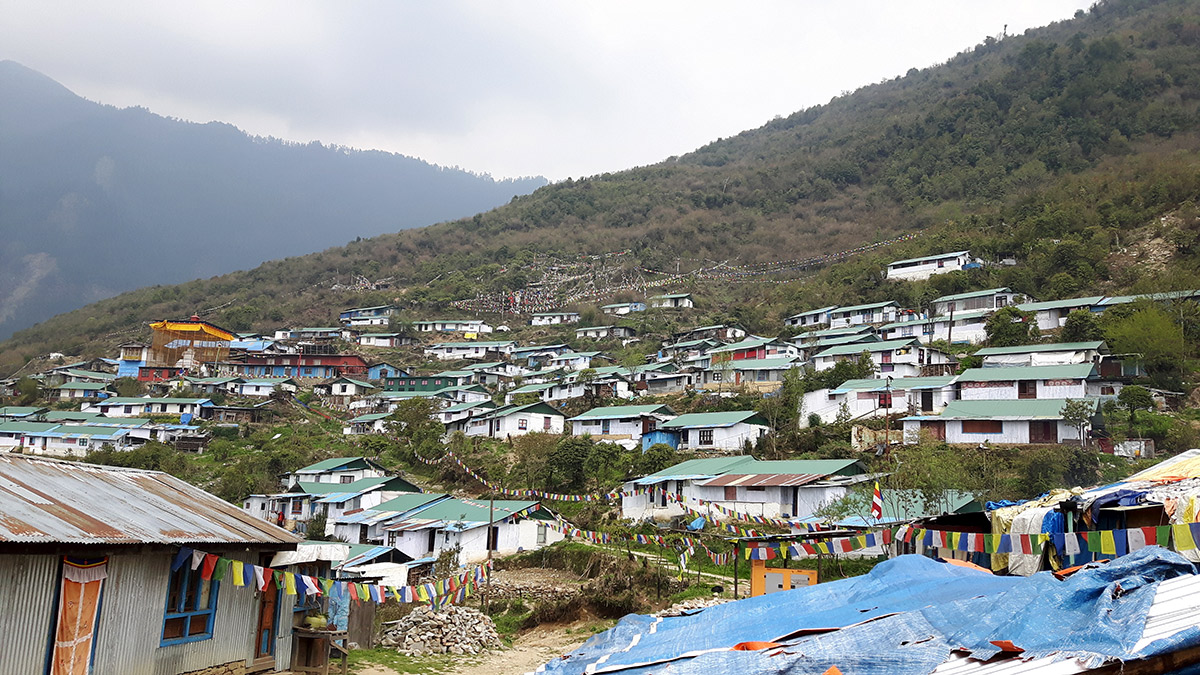
Chagam, 15 km from the border with Tibet, is a village of farmers and hosts a large community of Tibetan nuns and monks (about 135 in total). Among the lungta, their little houses with green roofs and white walls seem set into the mountain. Their daily life flows slowly and serenely in prayer and in work in the kitchen and vegetable gardens.
Th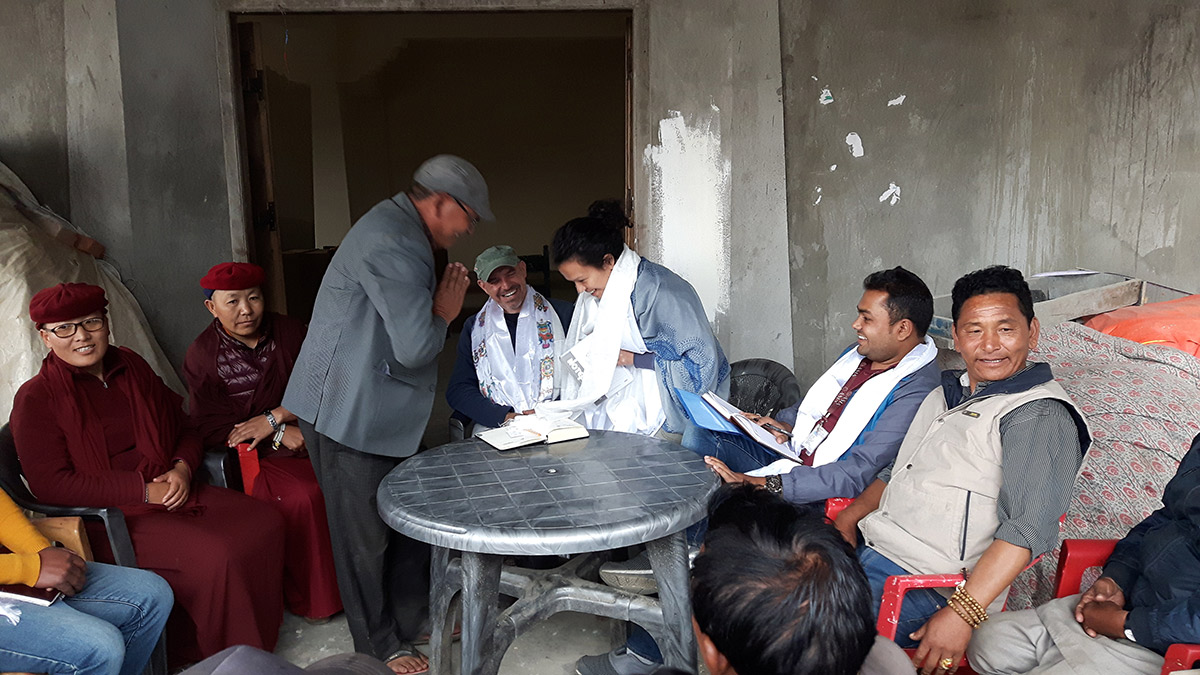 e whole community is there with us, many women welcome us and thank us by placing khatas around our necks. It is a truly magical place… It is cold on these mountains dotted with white-flowered rhododendrons and with “lokta”, the paper plant. But human warmth, the closeness of the people, the kindness of the nuns who cook hot pancakes and a jacket lent to me by the best dal bhat cook in Nepal, warm me. I would like to stop time.
A community representative and ASIA's engineers accompany me and Riccardo, ASIA's Country Representative in Nepal, to the top of the mountain to show us the progress of the construction of the new water supply. We climb up to 3,000 m a.s.l. and among shrubs and rocks we find the spring where everything begins.
Gradually we go back down following the water route and along the way we can admire the tanks, built with local techniques, and the trenches that will host the pipes until we reach the 37 fountains under construction, scattered in every corner of the village.
Even the children at school will have their own tap and will be able to get water easily thanks to child-sized taps!
Our little climb ends but the people want to talk with us. We all sit together in a circle. They tell us that they are grateful and happy to have received the precious gift of water and that they will take care of it.
They have a strange request for us, though. But first I must make a premise!
To improve their quality of life ASIA planned to distribute vegetable seeds and train farmers in setting up and caring for nurseries, as well as to distribute laying hens, in order to increase income opportunities and the economic development of the community.
The community of Chagam asks to have more seeds to plant instead of receiving hens as a gift because hens eat insects…and insects are living beings…and they do not kill living beings.
How could we not satisfy a request of such moral value? All ASIA projects try to meet the needs and requests of the beneficiaries, who in turn commit to participating actively in every phase of the activities.
It starts to hail. A milk tea, a visit to the stupa, a greeting to the nuns and a last hug to the community. It is raining. The sound of water still accompanies me on the return journey and still accompanies me now as the memory of the beauty of the mountains and the smiles of the people surfaces in my mind.
We will come back…the community still needs our help!
Marilena
Pubblicato il
14/06/2018