
News & Media
Sow the Future: 5 Reasons to Start Supporting a Child Through Long-Distance Sponsorship
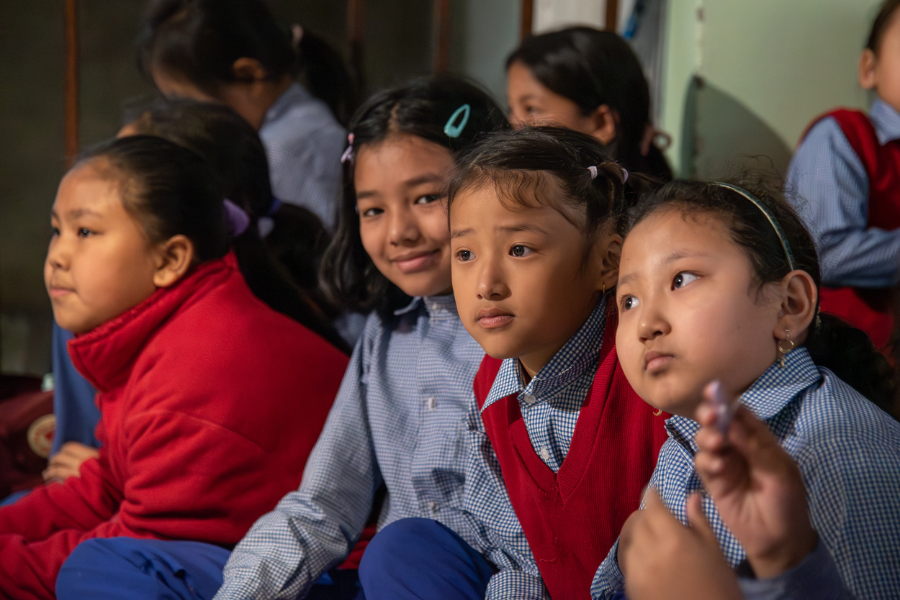
We live in complicated times: wars, climate crises, inequalities that seem to grow instead of decrease. It’s normal to feel overwhelmed, or to think that alone we cannot do much. Over more than thirty years of activity, ASIA has faced moments of great crisis and vulnerability, often sudden and violent, sometimes affecting not just some communities but entire populations. We have seen how, together, united by a vision of interdependence, both in values and in practice, we can build alternative futures to marginalization and poverty. In particular, there are small but powerful actions that continue to create a future even when everything around seems fragile.
Supporting a child through long-distance sponsorship is one of these actions: simple, concrete, capable of changing a life and often ours as well. We witness the depth of this bond, not only human. It is a choice of shared journey, exchange, and relationship, which, piece by piece, improves the life of everyone involved.
Here we share five good reasons, supported not only by our experience but also by international research, why starting today to support a child through long-distance sponsorship is not just an act of solidarity but a choice that truly impacts reality.
1. BECAUSE EDUCATION = SYSTEMIC CHANGE
UNESCO and the World Bank have reiterated for years: every additional year of schooling can increase future income by 9–10%. Education, when accessible and continuous, has a ripple effect: it reduces poverty, improves health, and opens opportunities that would otherwise remain out of reach. One of ASIA’s pillars is education. We have always believed in access to schooling as a tool for empowerment. School, especially in vulnerable contexts, means food security, social connections, and protection from child exploitation. Moreover, in countries hosting minorities, it also means safeguarding culture, language, and community heritage.
Through supporting a child through long-distance sponsorship, a child can have what we often take for granted:
attending school every day
receiving a warm meal
growing up in a safe environment
being accompanied by trained adults
These are simple but decisive foundations recognized by UNICEF as essential for healthy development. From here arise future teachers, nurses, agronomists, and artisans. From here, cycles of poverty that seem endless and dependence on external aid in the long term can be broken.
2. BECAUSE YOU DON’T NEED LARGE SUMS TO ACTIVATE BIG RIGHTS
Sometimes we think that to change something, we need large resources. In reality, in the countries where ASIA works, a small monthly contribution can cover a significant portion of a child’s educational costs. The World Bank estimates that modest but consistent donations can cover up to 60% of annual educational costs in many rural areas.
In practice: with less than what we spend on a dinner, we can guarantee someone a year of schooling. It is not about financial availability but about choosing to be present, with continuity and trust. About stopping the belief that we cannot make a difference. Abandoning distrust and indifference in favor of a positive vision.
3. BECAUSE IT’S NOT AN IMPERSONAL ACT: IT’S A HUMAN AND CULTURAL BOND
One aspect that many sponsors do not expect is the human impact of sponsorship. Letters, drawings, photographs, stories of everyday life: these are not mere updates, but traces of a relationship that grows.
ChildFund and UNICEF emphasize the importance of this exchange: it is not “charity,” it is encounter.
It is a way to know another culture through the eyes of a child, without filters. To understand what it means to live in a high-altitude village, in a community school, in a family that struggles every day to build a different future.
At a time when many of us feel isolated and distant, this type of relationship becomes a genuine point of contact. In our archives, we carefully preserve numerous testimonies and exemplary stories that reveal the long-term meaning of supporting a child through long-distance sponsorship. Even when the official sponsorship ends, a lasting relationship continues. People have seen children grow, achieve their dreams, and at the same time discovered a culture, becoming part of a bigger story, not so far from them.
4. BECAUSE IT’S AN ACT OF JUSTICE, NOT CHARITY
The UNDP reminds us of an uncomfortable truth: most of the opportunities we will have in life depend on the place we were born. Supporting a child through long-distance sponsorship exists precisely for this reason: to rebalance, at least in part, a system that distributes resources and opportunities in a profoundly unfair way.
Think for a moment: you live in a position of privilege not a fault, but an opportunity. You can become aware that on the other side of the world, someone does not have the same opportunities. But there is no separation; we are close in this inequality, one side and the other. Choosing to support a child through long-distance sponsorship means opening oneself to the possibility of creating a different dynamic in this unjust world a dynamic that redistributes resources from the ground up.
Supporting a child does not mean “saving” anyone. It means:
opening spaces of possibility
supporting the right to education
contributing to local development
strengthening communities with all the capacity but few resources
Solidarity is not an act of charity. It is an act of equity. With ASIA, this gesture is concrete, built on the real needs of the community, not imposed from above, and always respectful of the identities and culture of the children who are supported. With the campaign Sow the Future, we promote supporting a child through long-distance sponsorship starting from the Manasarovar School, on the outskirts of Kathmandu, which has welcomed the children of Tibetan refugee families for many years a model school born from the vision of two women and supported by collective effort, which you too can be part of.
5. BECAUSE IT’S A WAY TO RESIST, WITH CARE
We live in tough times. But choosing to take care of someone, even at a distance, is a form of gentle and profoundly human resistance. Emergencies are many; we are constantly exposed to tragic situations that often intensify our sense of helplessness or, worse, risk numbing us. The communities in the countries where we operate have taught us a special value that has given our commitment to cooperation even deeper meaning: interdependence.
Studies from Oxford and Harvard show that prosocial actions do not only help those who receive them, they also benefit those who give. They increase a sense of purpose, reduce feelings of helplessness, and reinforce the idea that we can still influence reality.
Supporting a child through long-distance sponsorship is exactly this: a small regained balance, a gesture that gives strength, a commitment that unites. The Sow the Future campaign was born with this vision: not to “help” someone, but to allow every child to access the rights they deserve. As at Manasarovar, sponsorship funds not just a school, but an educating community that restores opportunity and dignity.
More than aid: Sow the Future
Supporting a child through long-distance sponsorship is not a monthly fee.
It is a gateway that opens in our lives.
It is a name, a story, a photo arriving from afar. Of a child growing maybe at Manasarovar or in a remote village in Nepal, who one day can give back what they received.
In a simple and accessible gesture, there is far more future than we can imagine.
Sow the Future, support a child through long-distance sponsorship with ASIA. Learn more about the campaign at www.adoptibet.org
Pubblicato il
26/11/2025