What we do
Becoming an “amchi”: Phase two: construction of a canteen, a kitchen and housing for the teachers of the Tibetan traditional medicine school
Countries
Fields of intervention
- Education and Remote Sponsorship
- Protection of Spiritual, Cultural and Artistic Heritage
- Health and WASH
- Opening date: September 2020
- Closing date: July 2023
WHERE
Bagmati Province, Kathmandu District, Jarsingpauwa
CONTEXT
The age-old Tibetan medicine is rooted in the Bön culture, which predates by several centuries the arrival of Buddhism in Tibet and Nepal, and is still practised in Nepal, particularly in the remote areas of the Himalayas, where it represents the only real alternative to the absence of hospitals and medical facilities providing modern medical services. It is also a type of medicine accessible even to the poorest sections of Nepal’s population.
After the diagnosis, the Tibetan doctor (Amchi) recommends giving up harmful behaviours and recommends a diet suited to the patient. When prescribed, the remedies are mainly composed of medicinal plants with healing properties and minerals, while body therapies include acupuncture, kunye massage and moxibustion.
The school intends to offer Himalayan young people a professional prospect and, in the medium term, it will help to improve health services for the population of the remote mountainous regions of Nepal, where the absence of basic health services is a concrete obstacle for the local populations.
OBJECTIVES
General Objective
To improve basic health care in the remote areas of Nepal through the creation of a traditional medicine school and the training of qualified Himalayan traditional doctors
Specific Objectives
To create learning opportunities by building facilities for traditional medical education and capacity development for the students and traditional doctors of the Himalayan region.
To enable the poorest section of the population of rural Nepal to have access to adequate care.
To preserve traditional Tibetan culture and to promote intercultural exchange between Western and traditional medicine
ACTIVITIES
Construction of the building.
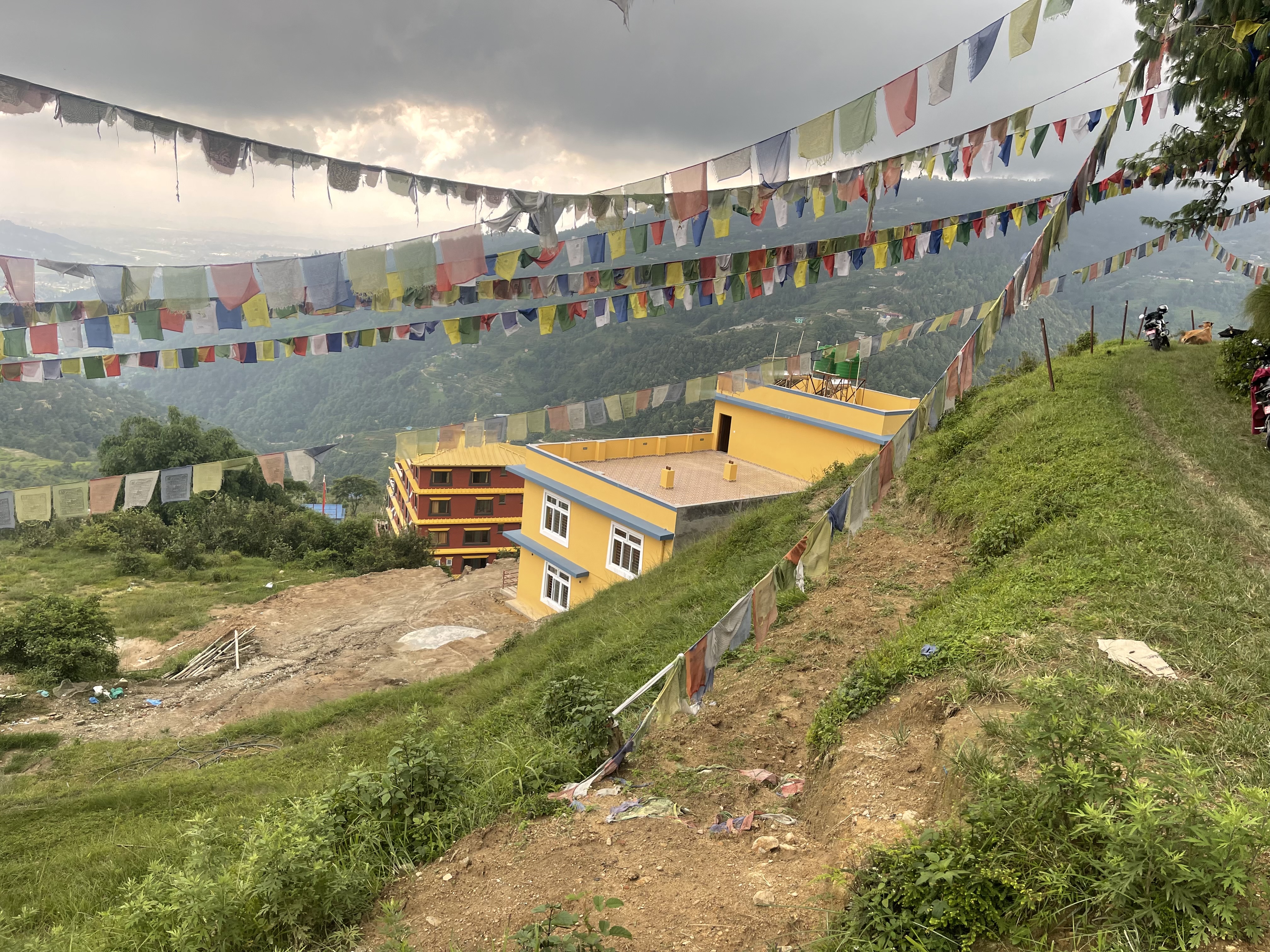
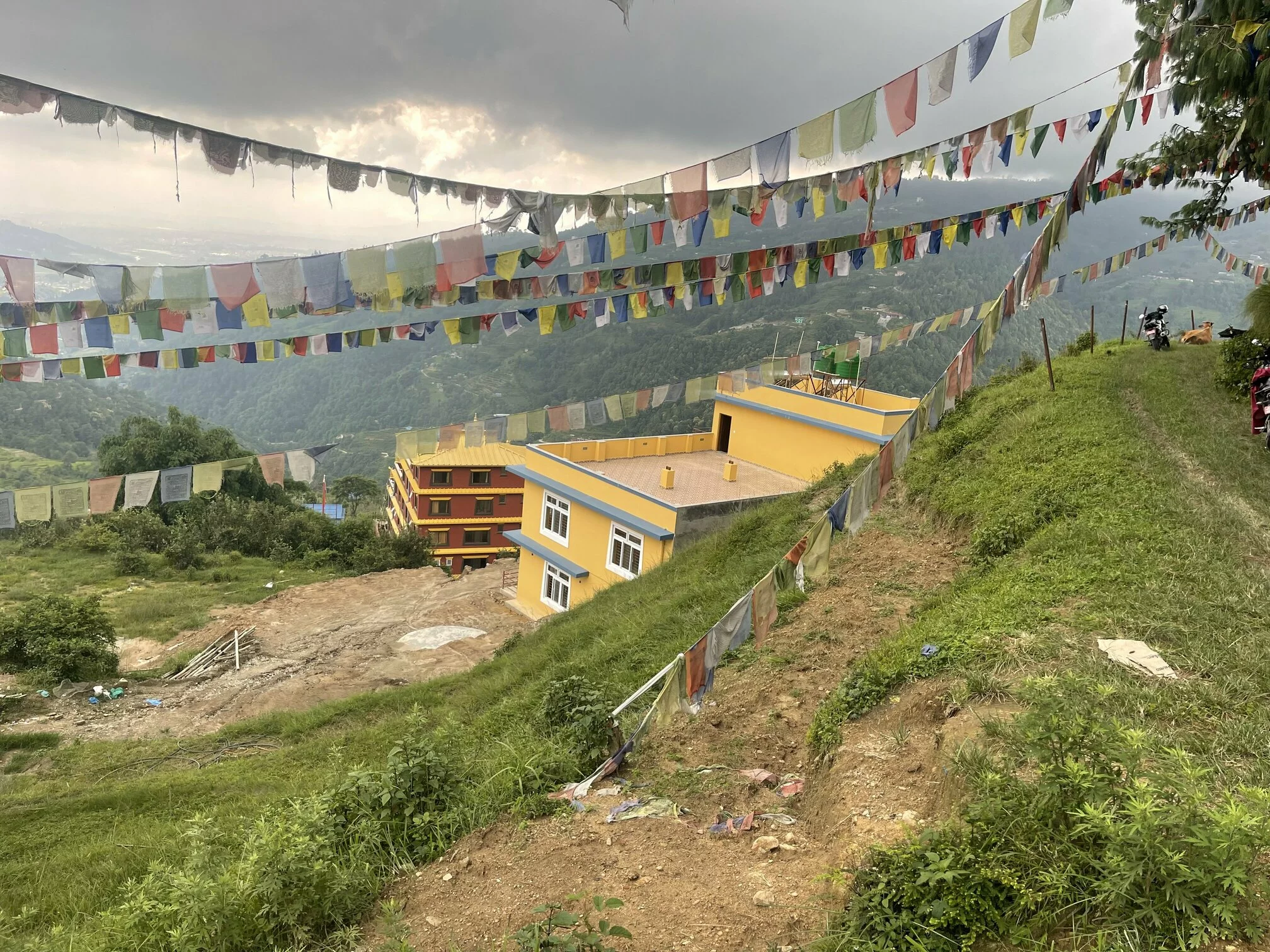
In 2023, at the end of July, the construction of the building was completed, and it was finally handed over to the beneficiaries (students and teachers). The building houses the canteen, the kitchens and the teachers’ accommodation, and while waiting for the building that will house classrooms and the library to be built, some rooms are used to hold the regular lessons. Moreover, on the terrace, an area for the drying and storage of the medicinal plants needed to prepare the medicines has been set up.
BENEFICIARIES
Direct: 32 students and teachers of the traditional medicine school
Indirect: about 128 people belonging to the families of the direct beneficiaries and about 6,250 people from the communities of Swayambhu and Lapsiphedi, and the rural populations of Humla, Dolpo, Mustang, Dhorpatan and Solukhumbu, who benefit from the medical services offered by the traditional medicine school.
PARTNERS:
Triten Norbutse Institution