What we do
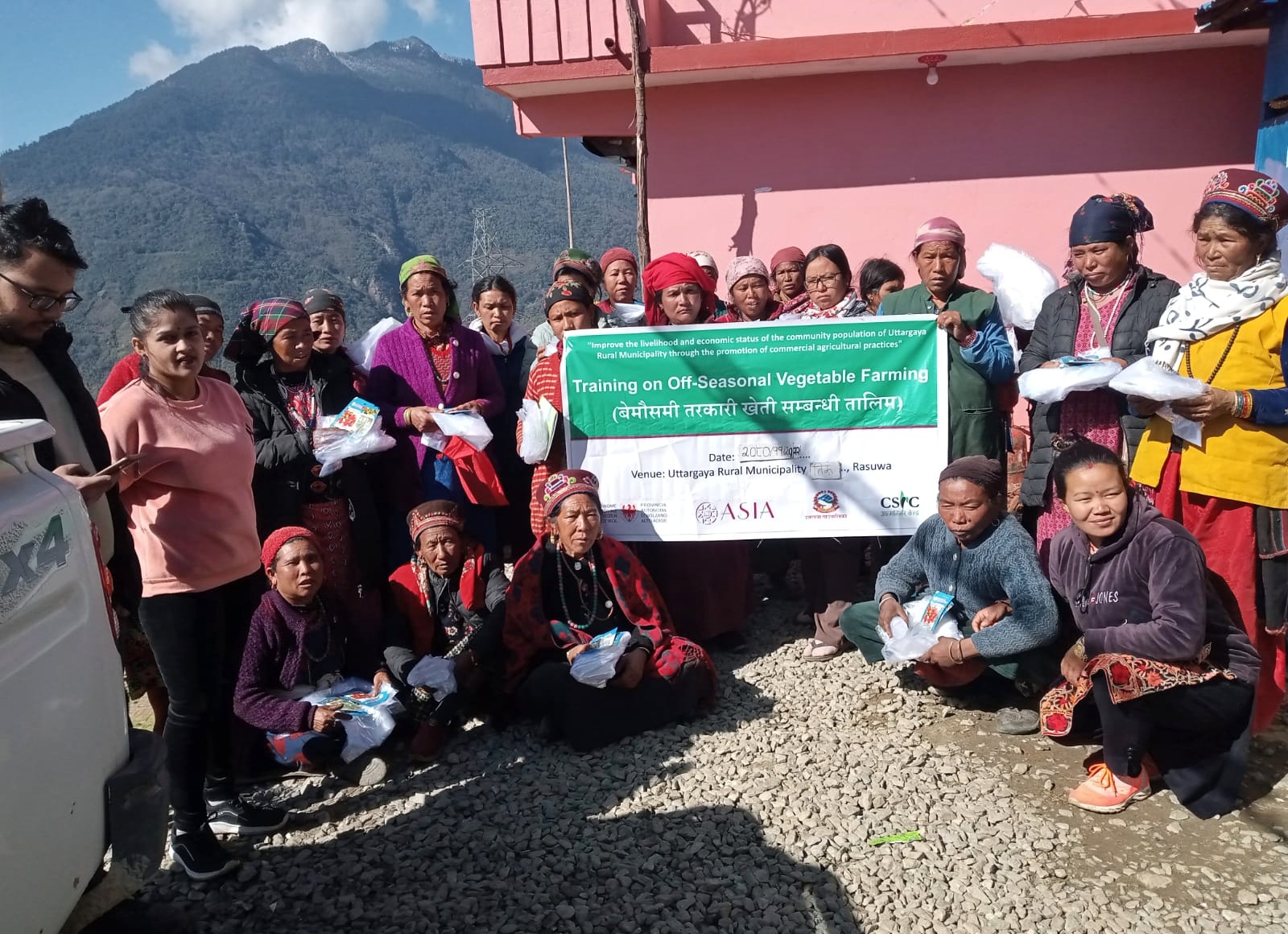
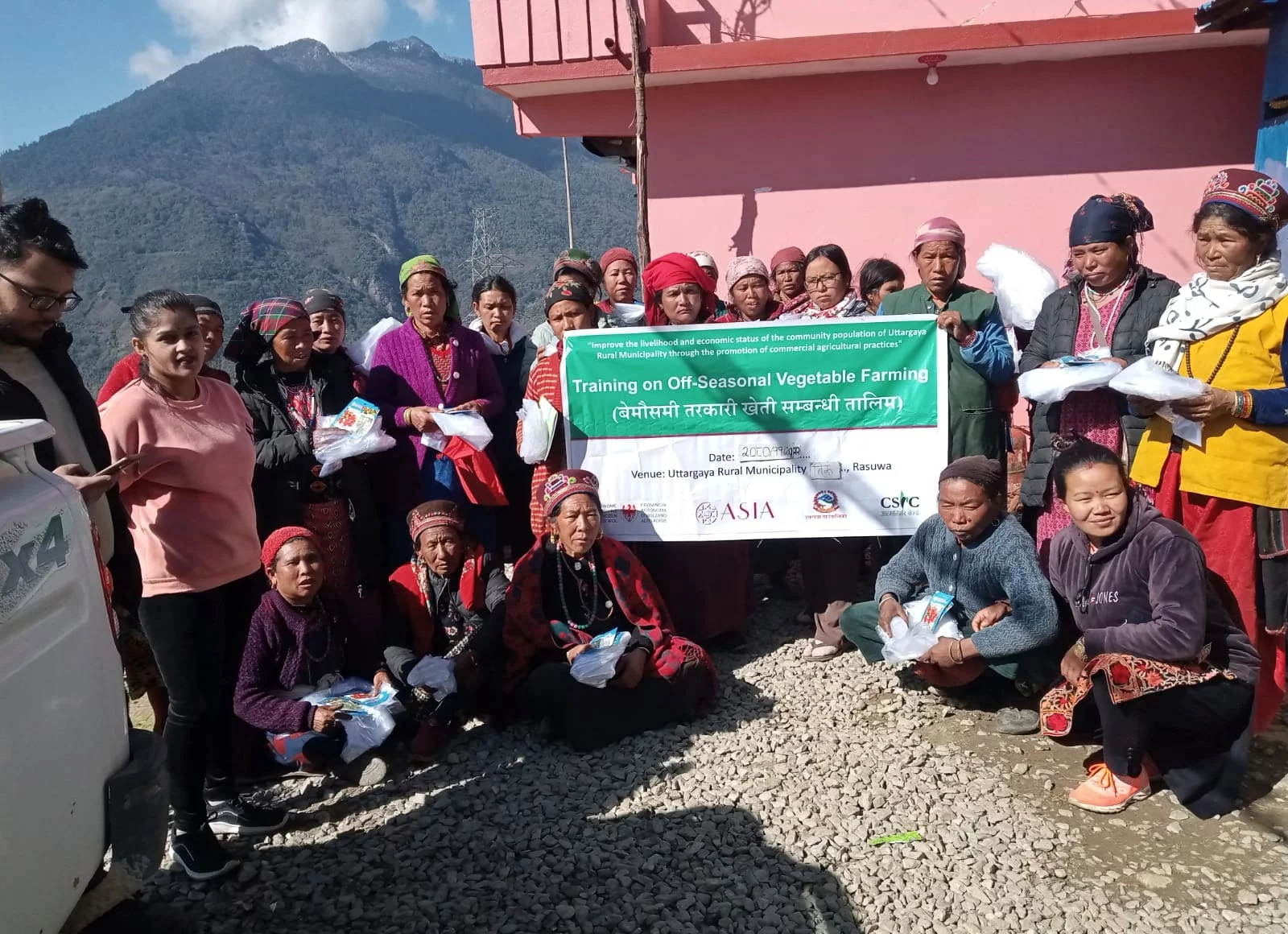
Improving the livelihoods and economic status of the population in Uttargaya Rural Municipality through the promotion of commercial agricultural practices
Countries
Fields of intervention
- Opening date: January 2023
- Closing date: June 2024
WHERE
Bagmati Province, Rasuwa District, Uttargaya Rural Municipality.
CONTEXT
In Uttargaya Rural Municipality, the primary source of livelihood and income is traditional agriculture, which on one hand fails to respond to the challenges posed by increasingly extreme monsoon patterns and climate change, and on the other requires high labour costs and time investment that are not offset by the income generated from production — which remains well below that of other areas with very similar climatic and topographical conditions. Uttargaya is particularly suited to the production of rice and maize as subsistence crops, and vegetables, potatoes and ginger as cash crops. Unfortunately, the absence of harvesters for maize and rice collection, and the distance from storage facilities needed to preserve potatoes and ginger and achieve good market prices, represent concrete obstacles to agricultural development in the area. This project proposes activities that will increase the production of both subsistence and cash crops while reducing the workload of farmers, with the aim of improving their livelihoods and socio-economic status.
OBJECTIVES
General objective
To improve the livelihoods and economic status of marginalised communities in Uttargaya Rural Municipality, Rasuwa District, Nepal, through sustainable agricultural production.
Specific objective
To increase off-season horticultural and staple crop production by 20%, with at least 60% women beneficiaries. To reduce the workload of farmers and increase the shelf life of selected crops.
PROJECT ACTIVITIES
- Dissemination of new agricultural techniques and support for off-season vegetable production
- Training and support for the production of staple agricultural products and NTFPs (Non-Timber Forest Products)
- Procurement of machinery, training, and support for the preservation of staple products
RESULTS
Strengthened local health services and restoration of educational conditions
BENEFICIARIES
Direct: 310 farming families, totalling 1,240 people.
PARTNERS
Community Self Reliance Center (CSRC) Nepal