
What we do
Revival of the Spiritual and Cultural Traditions of Shingnyeer to Empower Local Communities and Improve their Economic, Cultural, and Social Conditions
Countries
Fields of intervention
- Opening date: December 2025
- Closing date: July 2026
WHERE
Bhutan – Bumthang District, Ura County, Shingnyeer Village
CONTEXT
The Shingnyeer Temple, located in the Bumthang District, is an ancient 13th-century temple founded by Nyoton Trulzhig Choje. It represents an important spiritual and cultural center for the local community. The temple houses sacred relics and annually hosts major religious festivals that are widely attended at the local level, strengthening social cohesion and cultural identity.
At present, the temple is in severe structural decay: rotten beams, cracked walls, and spaces that are no longer adequate for the current population. The need for restoration and expansion is strongly shared by the residents, who have donated the land required for the new sections. However, their limited financial resources do not allow the necessary works to proceed.
The project therefore aims to preserve a site of high historical and spiritual value, ensuring safety, functionality, and continuity of its role as the heart of community life.
OBJECTIVES
To preserve and transmit to future generations the spiritual and cultural heritage of the Shingnyeer community.
To restore, consolidate and enlarge the structure of the Shingnyeer Temple and equip it with adequate sanitation facilities in order to ensure a safe, accessible, and welcoming spiritual and cultural environment for both the local community and visitors.
ACTIVITIES
The project foresees the establishment of a committee composed of representatives from the three implementing organizations. The committee will be responsible for monitoring, coordinating, and documenting all project activities, and for maintaining relations with local authorities.
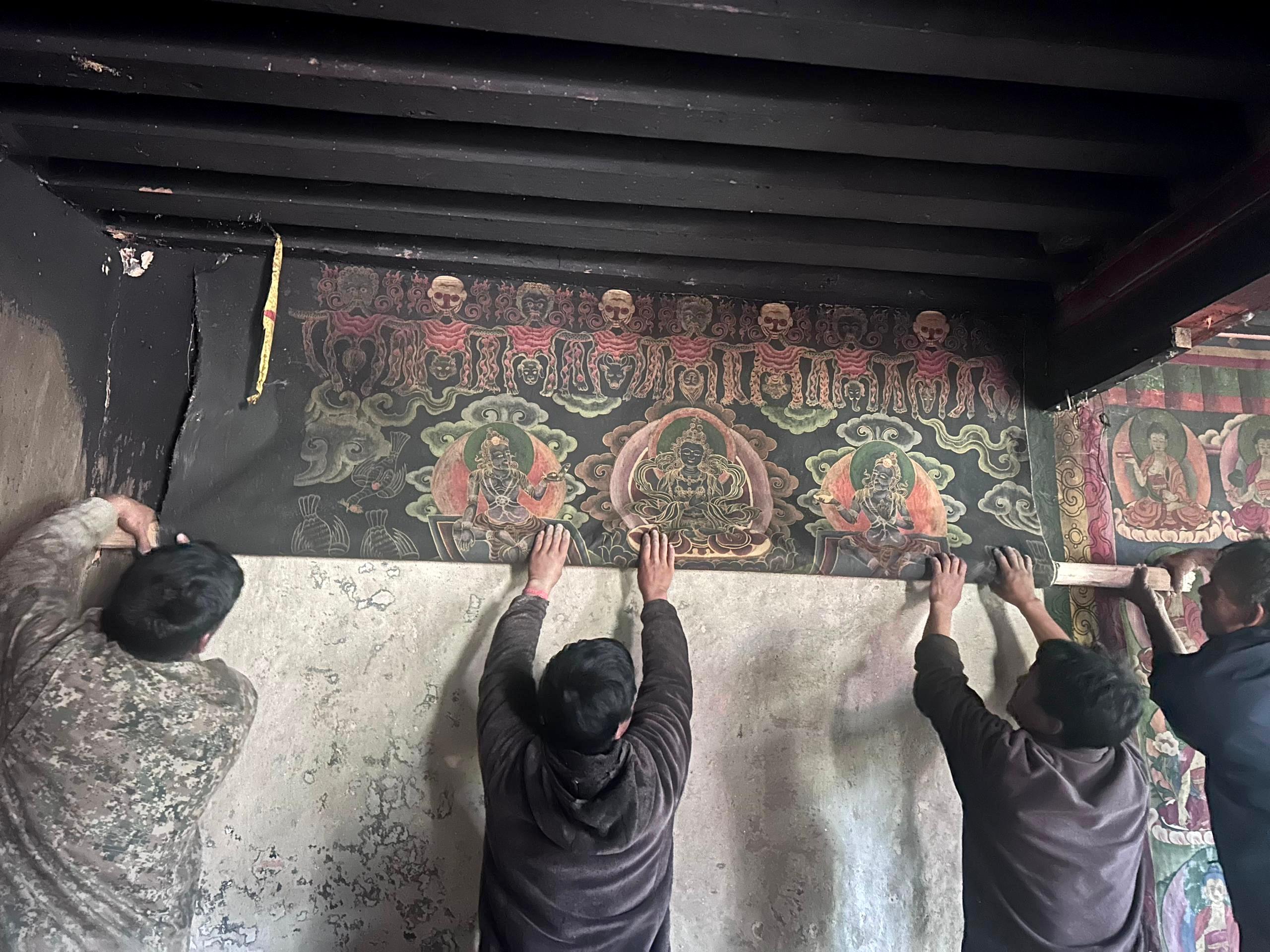
The main intervention concerns the restoration and enhancement of the ancient temple, including the consolidation of stone walls and preservation of original wall paintings. Deteriorated wooden structures (beams, windows, and ceilings) will be replaced, and the small deity room will be rebuilt adjacent to the eastern wall.
The building will be extended without altering its original structure, with the addition of new rooms on the eastern and western sides. All works will be carried out by local artisans, using traditional materials and construction techniques.
New toilet and sanitation facilities for men and women will be constructed using local materials, and equipped with proper drainage and a local water supply system.
Upon completion of the construction phase, two training programs will be organized for the villagers:
• A course on hygiene and disease prevention, involving 15 participants who will later act as trainers for the wider community;
• A course on homestay management and cultural event organization, engaging 15 young villagers (equally divided between men and women), focusing on hospitality, safety, and the promotion of local traditions.
BENEFICIARIES
Direct beneficiaries: 44 families, for a total of approximately 350 people living in and around the Shingnyeer Temple, actively engaged in the project.
Indirect beneficiaries: 301 families from 10 villages connected to the Shingnyeer Temple, amounting to about 2,000 people.
PARTNERS
Druk Nyo Foundation
Shingnyeer Temple Restoration Committee
ASIA