
What we do
Honey value chain development in the buffer zones of Langtang National Park as a means of reducing environmental conflicts and securing rural livelihoods
Countries
Fields of intervention
- Opening date: March 2024
- Closing date: March 2026
WHERE
Nepal, Bagmati Province, Rasuwa District, buffer zones of Langtang National Park
CONTEXT
Communities living in the buffer zones of Langtang National Park, in Rasuwa District, rely heavily on local natural resources for their livelihoods. Subsistence agriculture and forestry harvesting are their main sources of income, but the lack of economic opportunities and limited access to markets make families particularly vulnerable to poverty and food insecurity.
At the same time, pressure on natural resources generates conflicts between local communities and wildlife, especially over land use and crop protection. In this context, developing sustainable economic activities represents an opportunity to improve livelihoods while reducing environmental impact. The project promotes the development of the honey supply chain as a sustainable source of income for local communities, strengthening beekeepers' skills, improving honey production and marketing, and promoting practices compatible with the conservation of the park's ecosystem.
OBJECTIVES
General objective
Strengthen the livelihoods of local communities in the buffer zones of Langtang National Park by promoting sustainable economic activities compatible with environmental conservation
Specific objective
Develop and strengthen the honey supply chain in local communities through technical training, production support, and improved market access, contributing to the reduction of environmental conflicts and improving rural household incomes.
PROJECT ACTIVITIES
- Selection of beneficiaries among marginal farmers and small landowners.
- Formation and organization of honey producer groups.
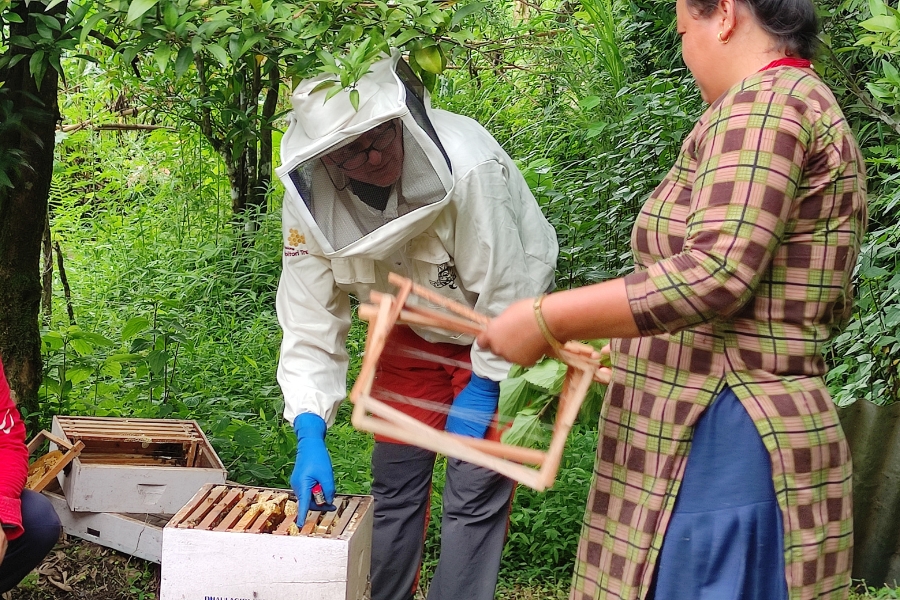
- Technical training on hive management and on-field support.
- Training on honey harvesting, processing, and storage.
- Distribution of equipment and beehives.
- Support for business planning and establishment of market linkages.
RESULTS
- Improved technical skills of local beekeepers in sustainable honey production.
- Increased honey production and quality in the affected communities.
- Strengthening income opportunities for rural households.
- Reduced pressure on natural resources and conflicts between local communities and wildlife.
- Increased awareness of the importance of environmental conservation in the park's buffer zones.
BENEFICIARIES
Direct: 110 beekeepers (76 women, 69%)
Indirect: 495 rural households in the buffer zones of Langtang National Park involved in beekeeping activities and the entire local community in Rasuwa district
PARTNERS
Pipal Nepal