
What we do
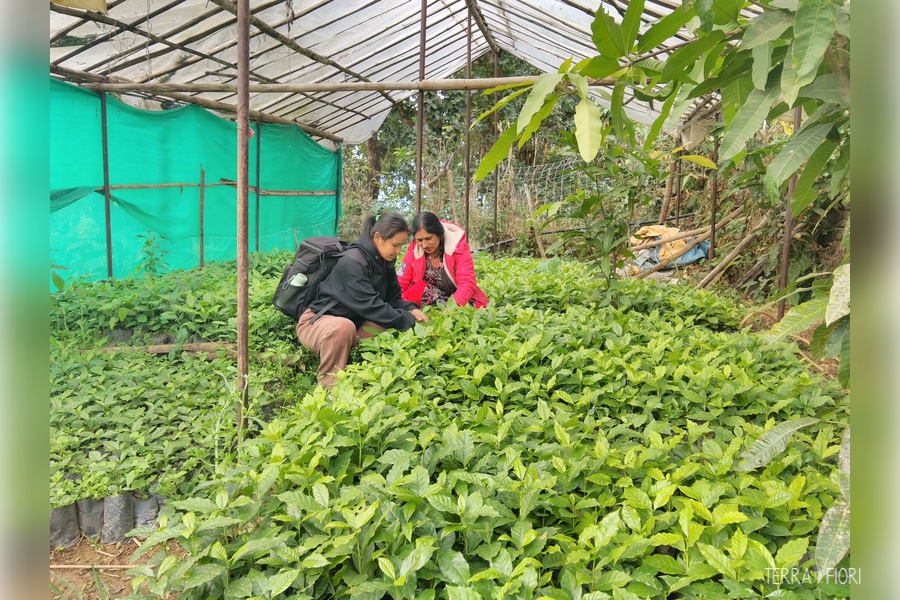
Tree in a Cup: an agroforestry project – Rasuwa, Nuwakot, Tanahu
Countries
Fields of intervention
- Opening date: February 2022
- Closing date: February 2023
WHERE
Rasuwa, Nuwakot, Tanahu and Lamjung Districts.
CONTEXT
Traditional agroforestry practices in the districts of Rasuwa, Nuwakot, Lamjung and Tanahu play an important role in farmers' livelihoods, as agricultural productivity is declining and traditional forest resources are no longer able to meet the growing demand for food, fodder and timber. At the same time, environmental degradation is emerging as a new challenge in Nepal and in the project areas. Agroforestry is therefore one of the most effective approaches to address this situation, and local knowledge of agroforestry, educational and development practices is essential to improving these methods. The project promotes the economic growth of the Rasuwa, Nuwakot, Tanahu and Lamjung districts by increasing productivity and income from the cultivation of coffee, fruit trees and multipurpose trees. It is a multi-year project running since 2017.
OBJECTIVES
General objective
To reduce poverty in Nepal through greater competitiveness in international trade and the domestic coffee market. To improve the marginal land use of Rasuwa District through fruits, fodder and multipurpose trees. To create employment opportunities for young community members and provide them with a sustainable source of income, mitigating the trend of migration towards urban areas and the Persian Gulf.
Specific objectives
To expand the area of coffee orchards and increase coffee production in the country.
To support the use of marginal lands and the export of products.
To improve forest areas in the districts of Rasuwa, Nuwakot, Tanahu and Lamjung through the planting of productive species.
ACTIVITIES
- Installation of an agroforestry nursery
- Installation of four rainwater harvesting tanks
- Purchase and production of seedlings
- Training on land preparation and follow-up on seedling establishment
- Seedling establishment: transport, land preparation and planting
- Geotagging of seedlings
- Training on organic farming practices and fair trade principles
- Training on reforestation and reclamation of marginal lands
RESULTS
Coffee-cultivated areas have been expanded in the districts of Rasuwa, Nuwakot, Tanahu and Lamjung, and an effective management model has been adopted to reduce the impact of disease on coffee orchards. Forest productivity has been increased in terms of biodiversity and marginal land use through the planting of new species. The quality and productivity of cooperatives has improved and decent working conditions have been promoted. Farmers' production has improved and support has been provided for product trade management.
BENEFICIARIES
Direct: 1,092 beneficiaries.
Indirect: 4,368 beneficiaries.
PARTNER
Nepal Agroforestry Foundation Beautiful Coffee Nepal Support Activities for Poor Producers Nepal