
What we do
Improving livelihoods through coffee and honey value chains: A sustainable agroforestry approach in Naukunda, Rasuwa
Countries
Fields of intervention
- Opening date: January 2026
- Closing date: December 2026
WHERE
Naukunda Rural Municipality, Rasuwa District, Bagmati Province
CONTEXT
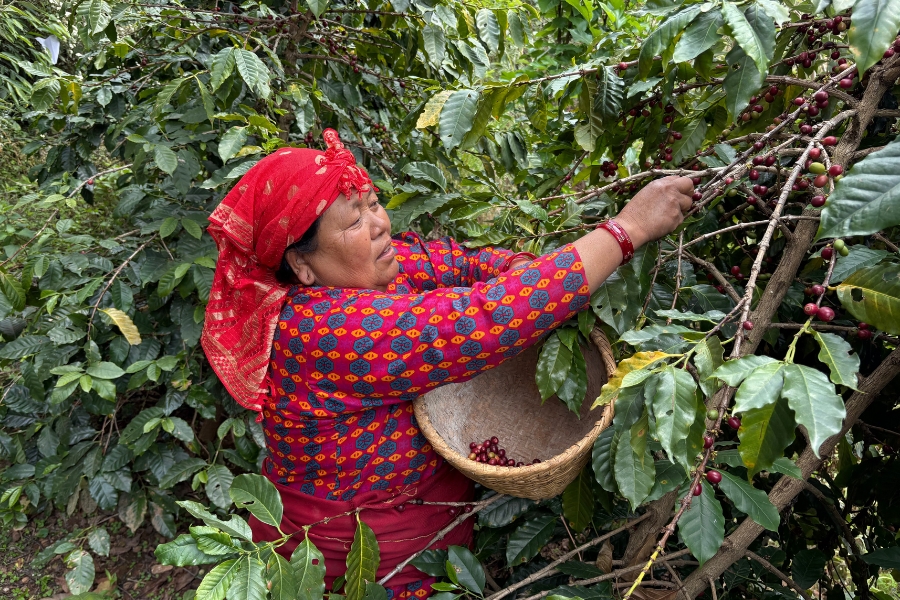
In the remote mountain communities of Naukunda Rural Municipality, Rasuwa District, agriculture remains the main source of livelihood, yet it is increasingly undermined by climate change, environmental degradation, limited market access and persistent economic marginalisation. Most families depend on small-scale subsistence farming on fragmented and low-productivity land, while recurrent landslides, erratic rainfall and poor infrastructure continue to reduce production, weaken food security and limit income opportunities. In this context, coffee and honey offer a promising pathway for more resilient and sustainable rural development. Thanks to the area’s favourable agroecological conditions, both value chains have strong potential to generate income, improve land use and support biodiversity conservation through integrated agroforestry systems. However, local producers still face major constraints, including low yields, limited access to quality inputs, insufficient processing facilities, weak cooperative structures and difficulties in reaching profitable markets. ASIA, in partnership with PIPAL Nepal, is addressing these challenges through an integrated initiative that combines technical training, agroforestry promotion, support to coffee and beekeeping production, strengthening of processing capacities and improved marketing strategies. By enhancing both productivity and value addition, the project contributes to improving food security, climate resilience and economic opportunities for rural farming communities, with particular attention to the inclusion of women, youth and Tamang producers.
OBJECTIVES
General objective
Improving food security and sustainability of Naukunda farming communities by strengthening the coffee and honey supply chain
Specific objective
Increase the productivity and quality of coffee and honey through sustainable agroforestry practices and integrated management models, ensuring greater climate resilience and access to quality production inputs for producers;
Improve product processing, management, and marketing capacity to ensure producers have better access to markets and greater profitability in the supply chain.
PROJECT ACTIVITIES
- Improving agricultural production and sustainability through agroforestry practices and integrated management models;
- Strengthen the production and infrastructure resources of cooperatives and producers with targeted investments to improve processing capacity, cooperative management, and product added value;
- Strengthen the commercial and institutional skills of producers and the cooperative;
- Commercial enhancement of products through positioning with branding strategies, certifications and access to new markets.
RESULTS
- Strengthening the technical and production capacities of coffee and honey producers.
- Strengthening production and infrastructure resources to improve quality and processing.
- Strengthening commercial and institutional capacities.
- Commercial enhancement of products through branding and market access strategies.
BENEFICIARIES
Direct: 1,100 small producers, (60% women, 70% Tamang community)
Indirect: Over 5,000 people from communities in the Naukunda municipality
PARTNERS
PIPAL Nepal
Naukunda Rural Municipality in Rasuwa District